Category: Camino Francés

  • Encuentro con los toros

    Encuentro con los toros

    I woke up in Puente la Reina with a slight hangover from last night’s beers, but water and exercise are the best cure, so I was in luck. I started hiking just after 7 a.m., and soon hit a gnarly, steep uphill climb that felt endless. Pilgrims were pulled over on the side of the incline from top to bottom, catching their breath, and I joined them for a quick break, laughing with a Dutch pilgrim who blamed his struggle on the previous night’s wine. The view at the top—rolling fields under a pale overcast sky—made the burn worthwhile.
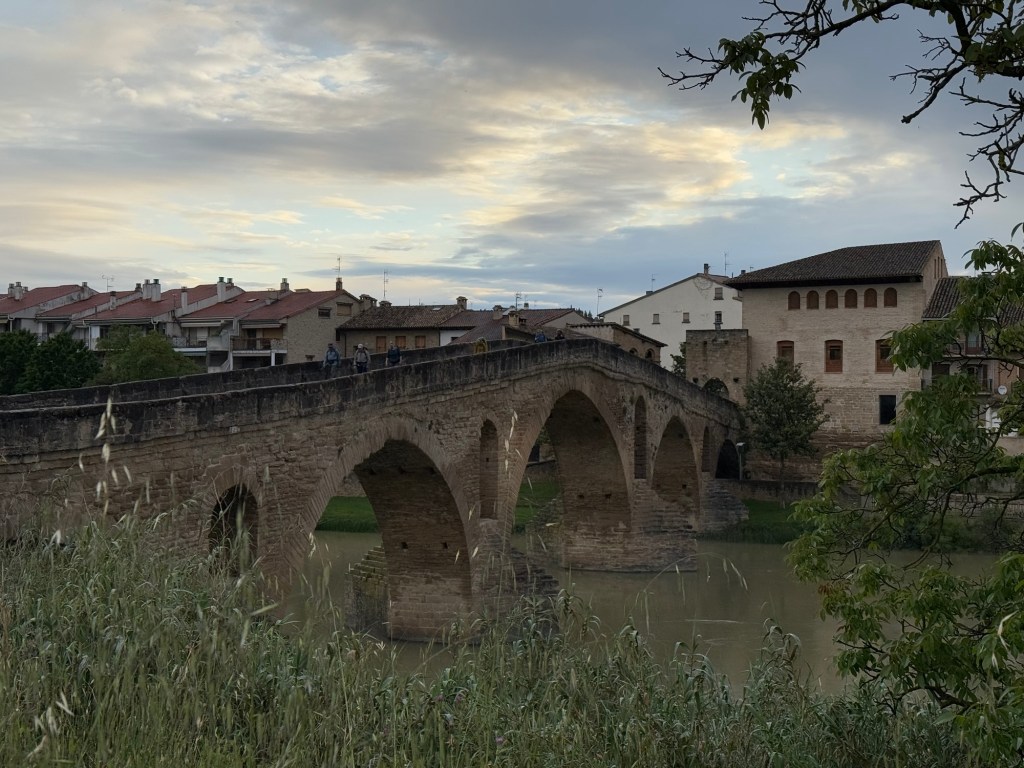
    Puente la Reina

    At 9 a.m. I cut through Cirauqui, a hilltop village with cobbled streets and stone houses. At the town’s exit, I walked a well-preserved Roman road, its ancient cobblestones worn smooth by centuries of travelers, leading to a small bridge with a single, sturdy arch that’s stood since the days of the emperors.
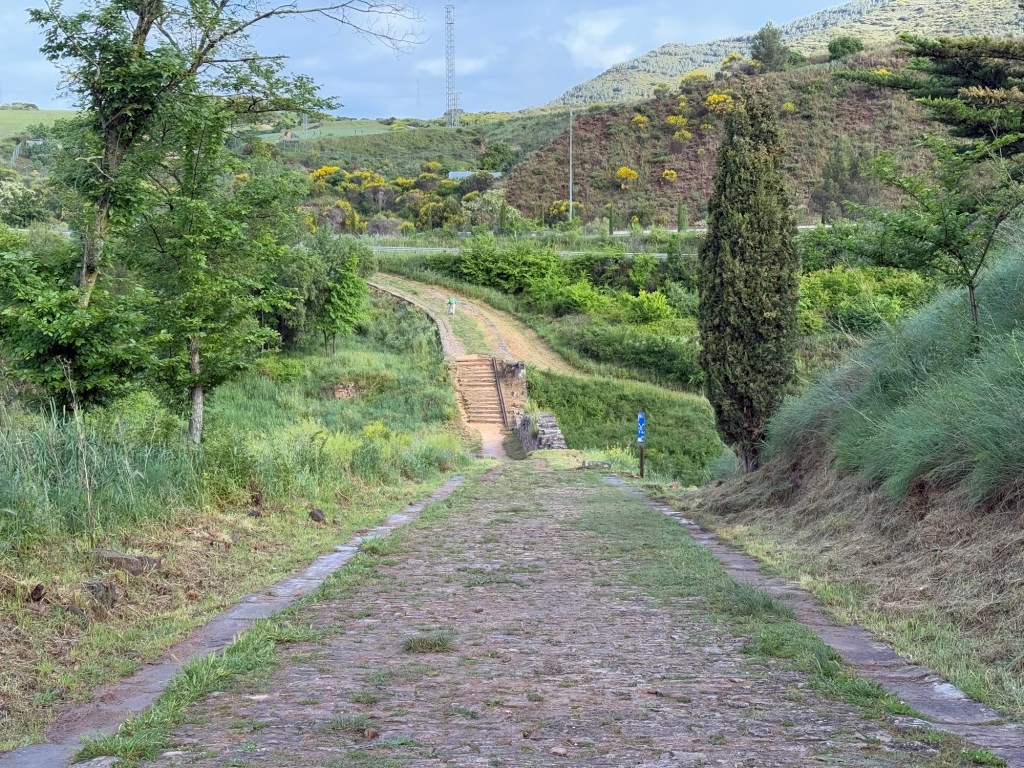
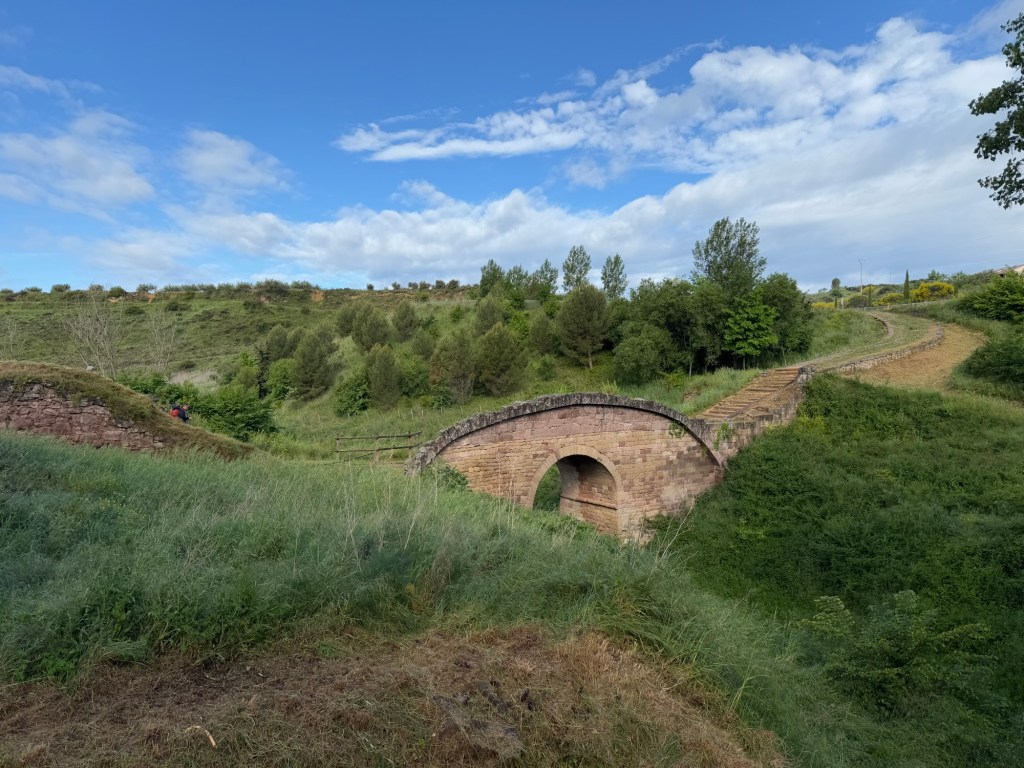
    Old Roman road leaving Cirauqui
    Roman bridge at Cirauqui

    With soreness and back pain from the previous day easing, I felt strong enough to bypass Estella, pushing 18 miles via an alternative route to Villamayor de Monjardin. Things were going smoothly until I crossed the Ega River and Google Maps told me to turn right onto a road. Two sets of large metal gates blocked the way, so I unlatched and relatched them. The trail continued through a pasture, and as I began to crest the hill, my heart sank. Off in the distance, I could make out several large pitch-black silhouettes with white horns.

    Fuck, Fuck, Fuck.

    I’d inadvertently wandered into a bull pasture.

    GPS tracks of my encounter with los toros.

    I slowly retrieved my phone from my right pocket and double-checked Google Maps and FarOut—a hiking map app. The path seemed accurate. I’ve walked through cow pastures before, but this is Spain. And these were gigantic black bulls. With sharp and shiny horns. And I am not a matador. I took a few seconds to consider my options and quietly and carefully backtracked through the pasture, unlatched and relatched the gates, and retraced my steps to the bridge over the Ega where I’d turned right. Rounding the corner, I quickly identified my mistake when I spotted an overgrown hiking trail hugging the fenceline of the pasture.
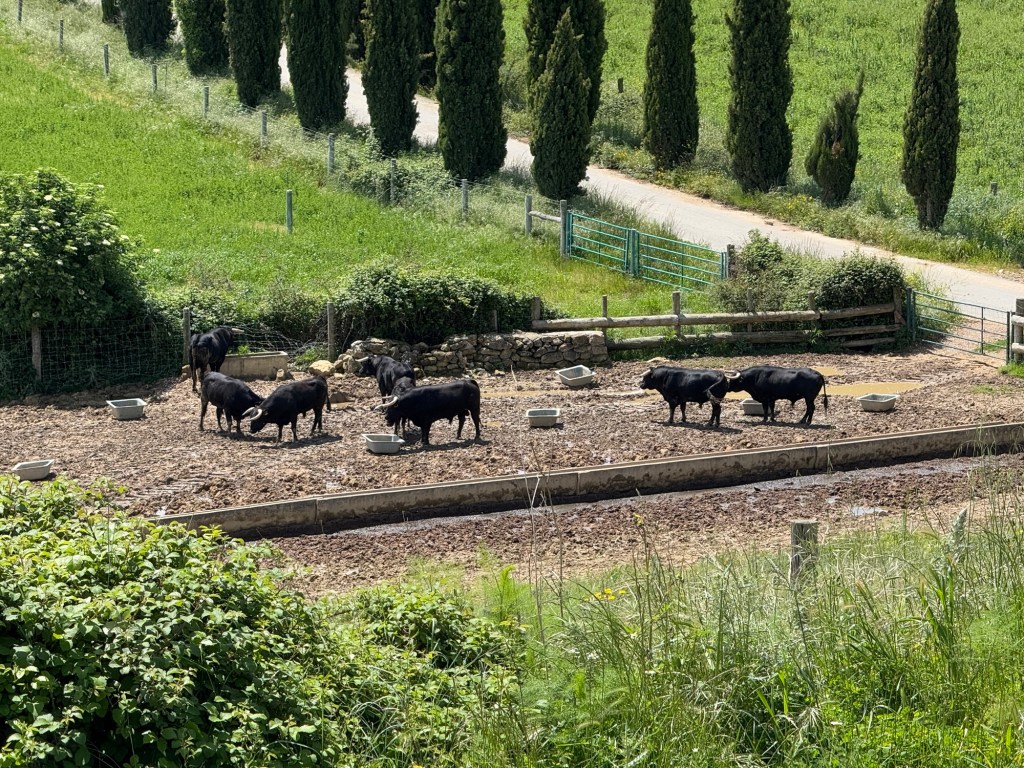
    Los Toros from the correct path.

    Heart still racing, I continued on, finally reaching a hostel in Villamayor de Monjardin run by Dutch volunteers. When I arrived, it looked like I would have the place all to myself. At about 6 p.m., I was joined by two brothers—Alden and Grant—from Michigan. We spent an hour talking comedy and politics.

    I showered, turned down dinner, and went to bed early to try and get a good night’s rest.

    The approach to Villamayor de Monjardin
  • …y eso es justo lo que harán

    …y eso es justo lo que harán

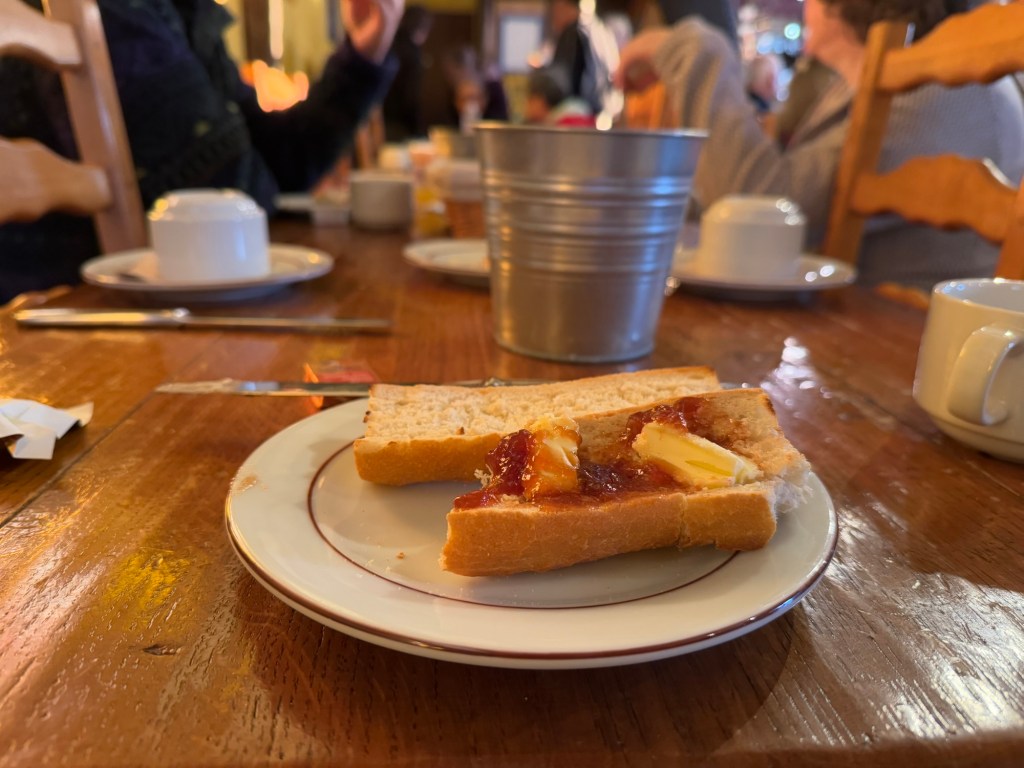
    I awoke in Orisson at 7 a.m. and walked across the road to the dining room for breakfast—toasted baguettes with butter and assorted jams—standard European fare.

    Toast for breakfast

    Thirty minutes into my day, I packed up my daypack and backpack, arranging for the blessed Donkey Service to transport the bulk of my belongings over the Pyrenees into Spain to the monastery at Roncesvalles. I bought a ham and cheese bocadillo and took to the road.

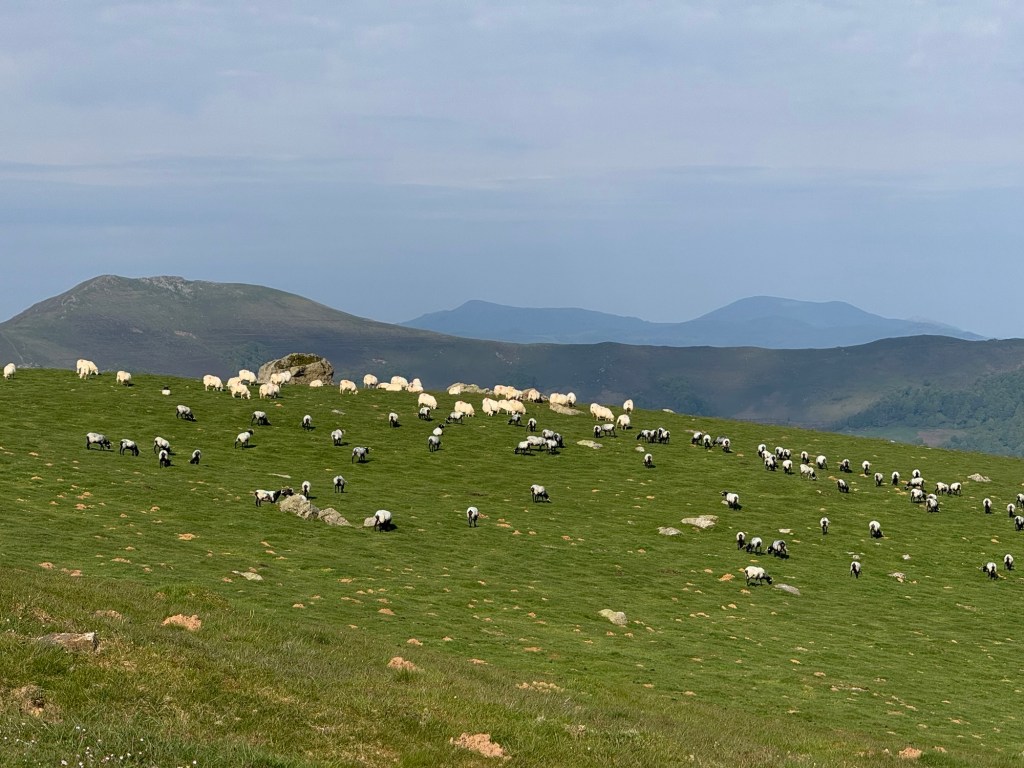
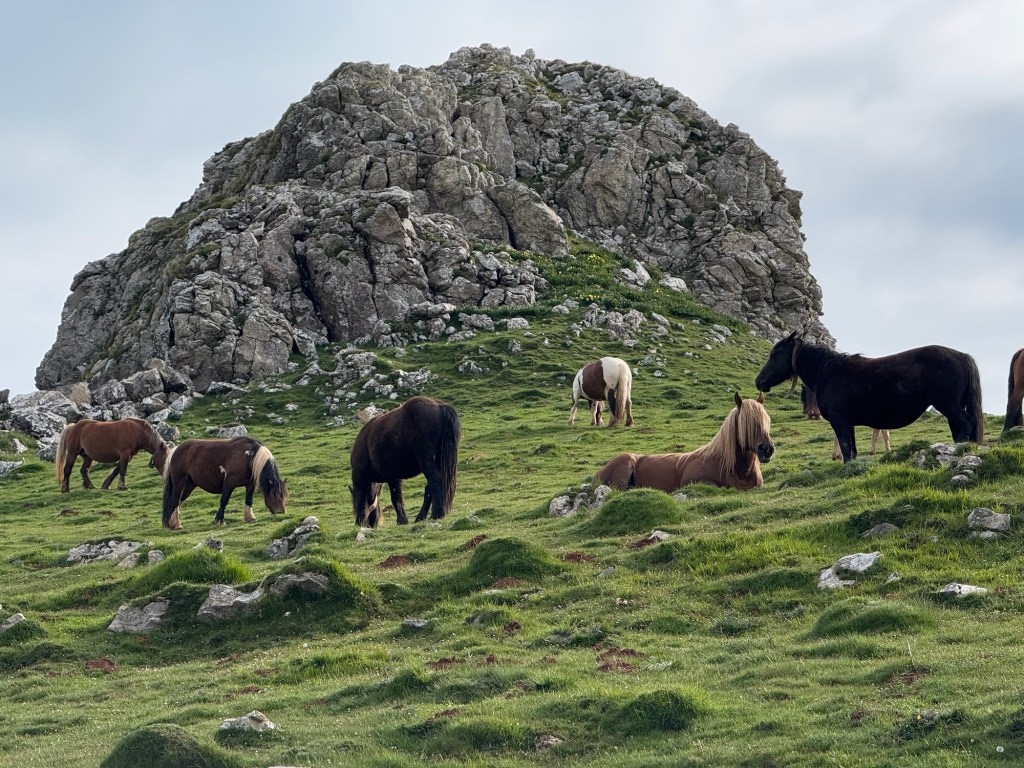
    Livestock lined the trail as I continued the climb—first cows, then horses. At the highest elevations, sheep. The weather was mild enough for shorts and a thin shirt. My back pain returned, but the views, as before, proved an adequate distraction. I left the Advil in the pack.

    Sheep
    Goodbye, horses

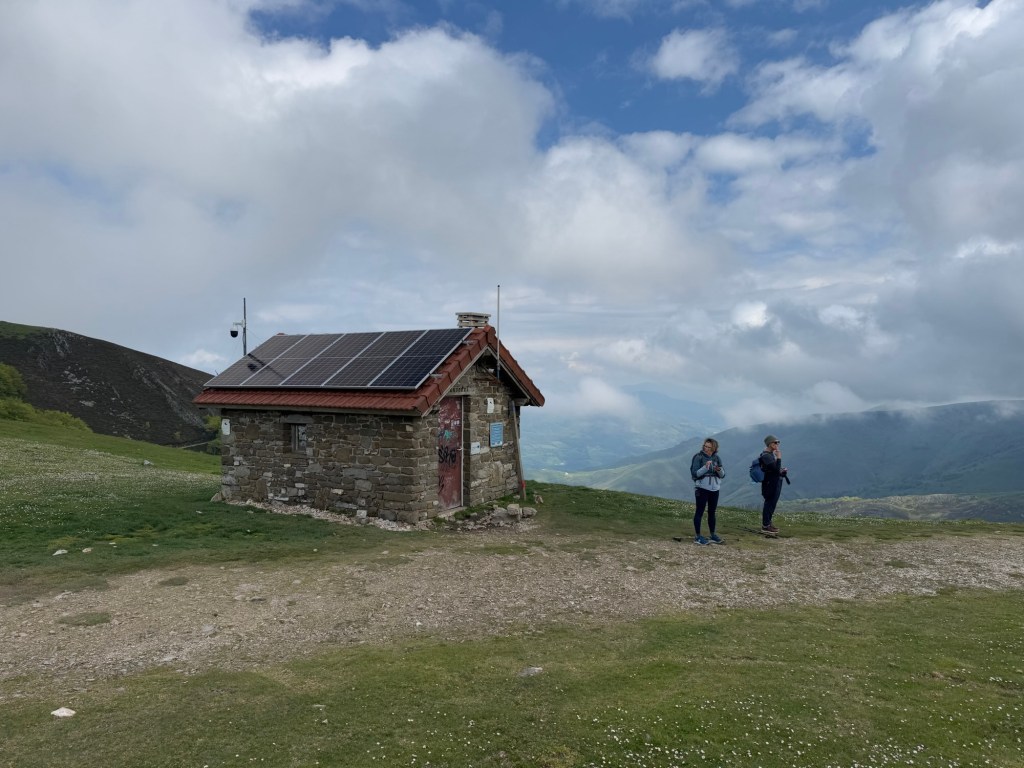
    The day required ascending 2,000 feet over eight miles to the near-mile-high Lepoeder Pass, followed by a three-mile, 1,600-foot descent to Roncesvalles. Just before the pass, I stopped by Refugio Izandorre, a small stone emergency shelter with solar panels and various instruments and transmitters, and ate my sandwich. I concluded the hut would make an adequate home.

    Refugio Izandorre emergency shelter

    Crossing the border into Spain, I opted for an alternate route, avoiding the steep, wooded descent most pilgrims choose. I followed the road west down to the valley below before cutting back east toward the monastery.

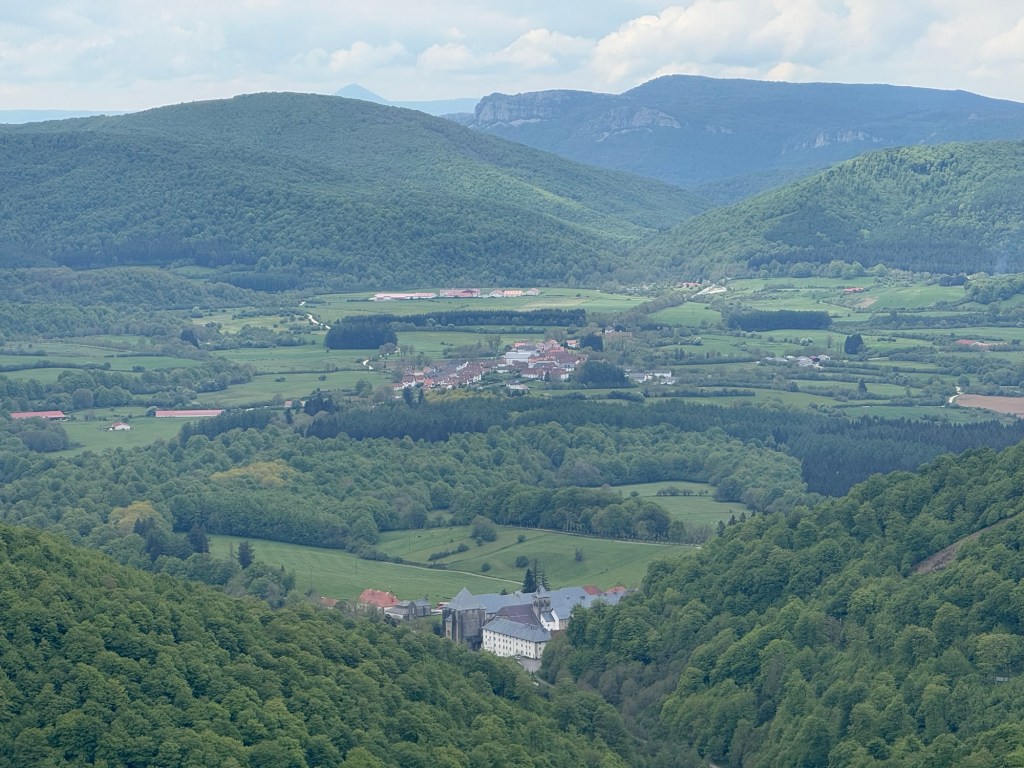
    A view of Roncesvalles Monastery from the alternate route. The small town of Burguete, Hemingway’s home while writing The Sun Also Rises, is in the background.

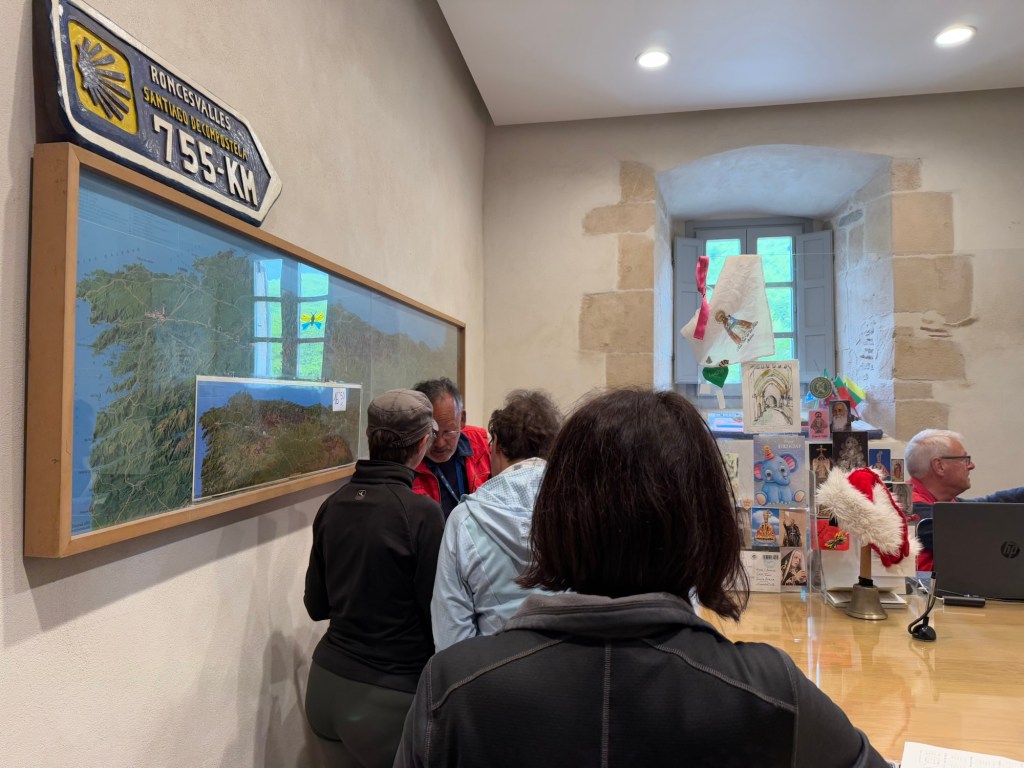
    I arrived at the monastery at 1:20 p.m. and stood in line until 2 p.m. when the hospitaleros unlocked the check-in office’s door. The Dutch volunteers were dedicated, but like the pilgrims’ office in St. Jean Pied de Port, they prioritized thoroughness over efficiency. With only two volunteers handling check-ins, the process dragged on for more than an hour.

    A near unbearable wait

    I was assigned a top bunk on the second floor of the 12th-century main building. The partitioned bunks offered some degree of privacy, a relief compared to the fifth floor’s wallless room, where up to 100 pilgrims will sleep in the open like refugees inside a relief tent.

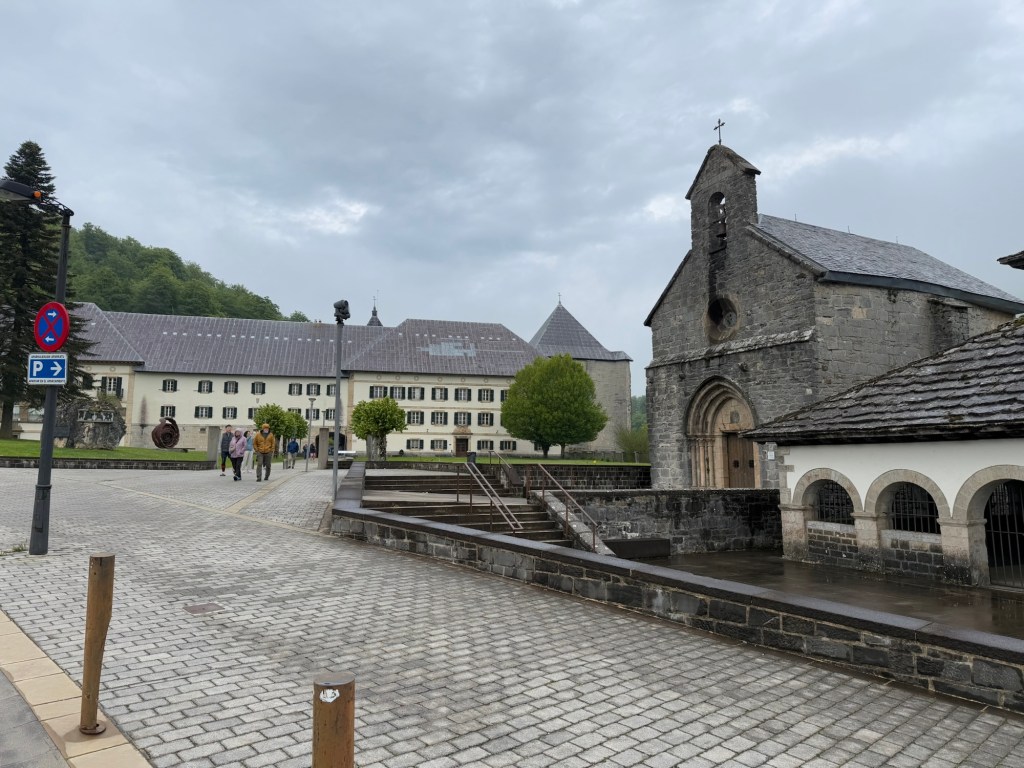
    Monastery at Roncesvalles

    I took a long, hot shower and spent a couple of hours writing syllabi and publishing assignments for two online courses I’ll teach this summer. I prefer not to work summers, but the last-minute offer was too lucrative to turn down—it’ll cover the cost of this trip and all my bills back home twice over.

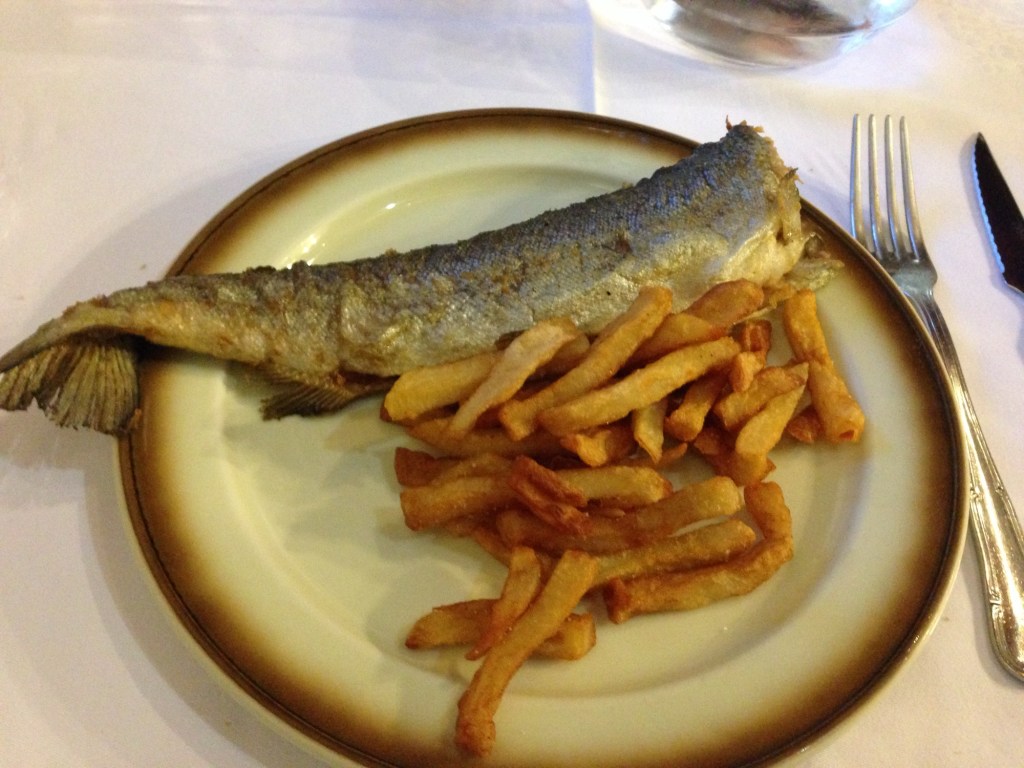
    Last time I was here, dinner was fried trout—tail and all. According to Hemingway, it’s an area staple. I decided to fast until i pass through Burguete in the morning.

    My meal in Roncesvalles in 2014
  • Ces bottes sont faites pour marcher…

    Ces bottes sont faites pour marcher…

    I fell asleep around 1 a.m., delayed by loud snoring from three of the eight people in my hostel room. I woke at 6:30 a.m. and took my time getting ready, with only 4.8 miles to cover today.

    The forecast predicted cloudy skies and temperatures in the 60s, so I wore shorts and a long-sleeve tee, packing a jacket and pants in my daypack in case the weather shifted.

    A view of the Nive Valley from 2,000’

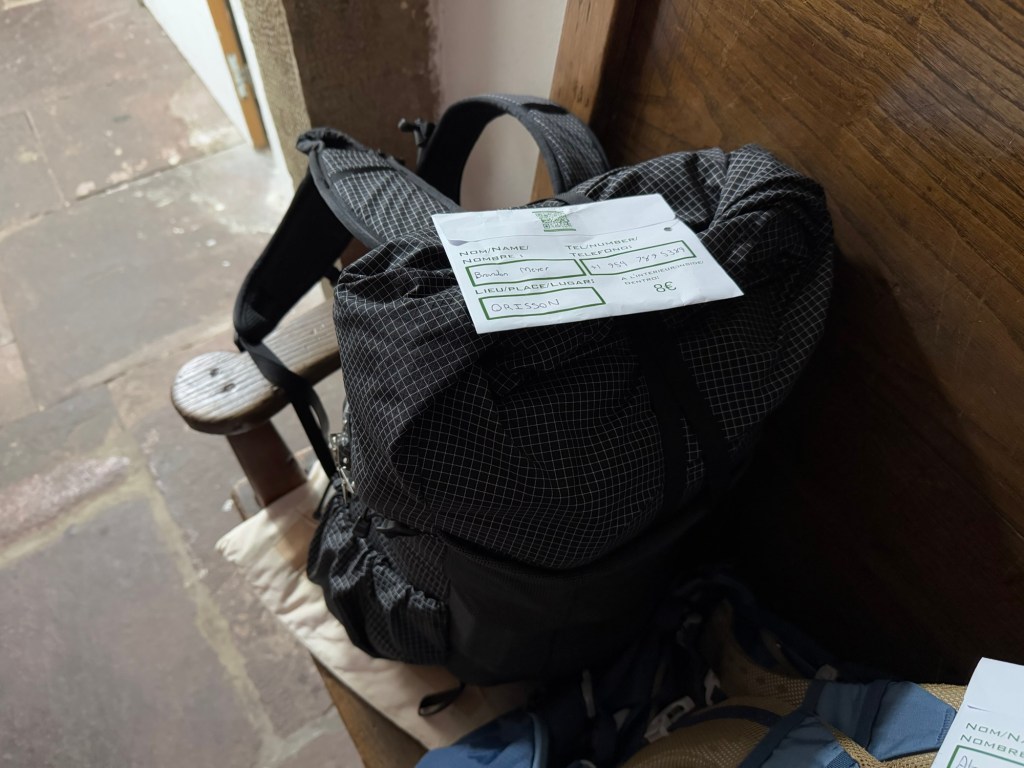
    For €8, a pack transport company, the Donkey Service, transported my backpack to Orisson. I stopped at a nearby bakery for a croissant and to get change for the fee.

    My bag prepped for pickup by The Donkey Service

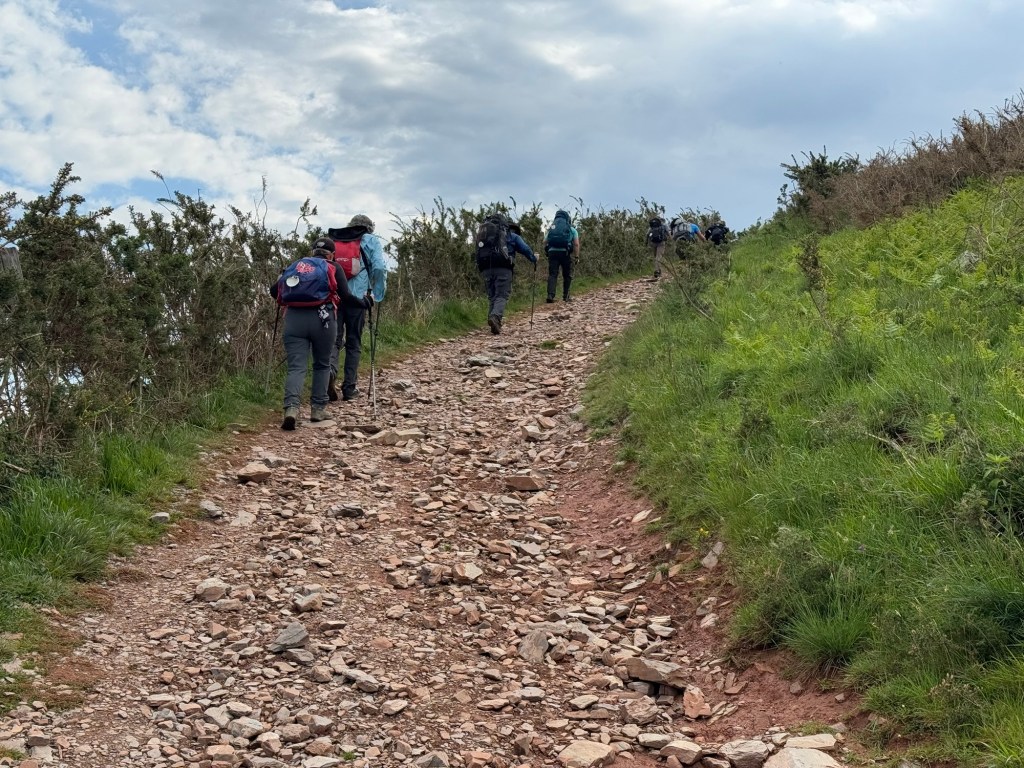
    Even without my pack, the climb out of St. Jean into the Pyrenees was grueling. My back ached much of the day. The scenery helped distract from the pain.

    Climbing above tree line.

    I reached Orisson, a small restaurant and hostel carved into the hillside, around 10:30 a.m. I ordered a ham and cheese bocadillo with a blond Basque beer. The ham was dry-cured Serrano, a staple of Spanish and Basque cuisine, paired with white cheddar on a soft baguette. I will be eating many of these over the next two months.

    Orisson Refuge is situated on the mountainside with a spectacular view

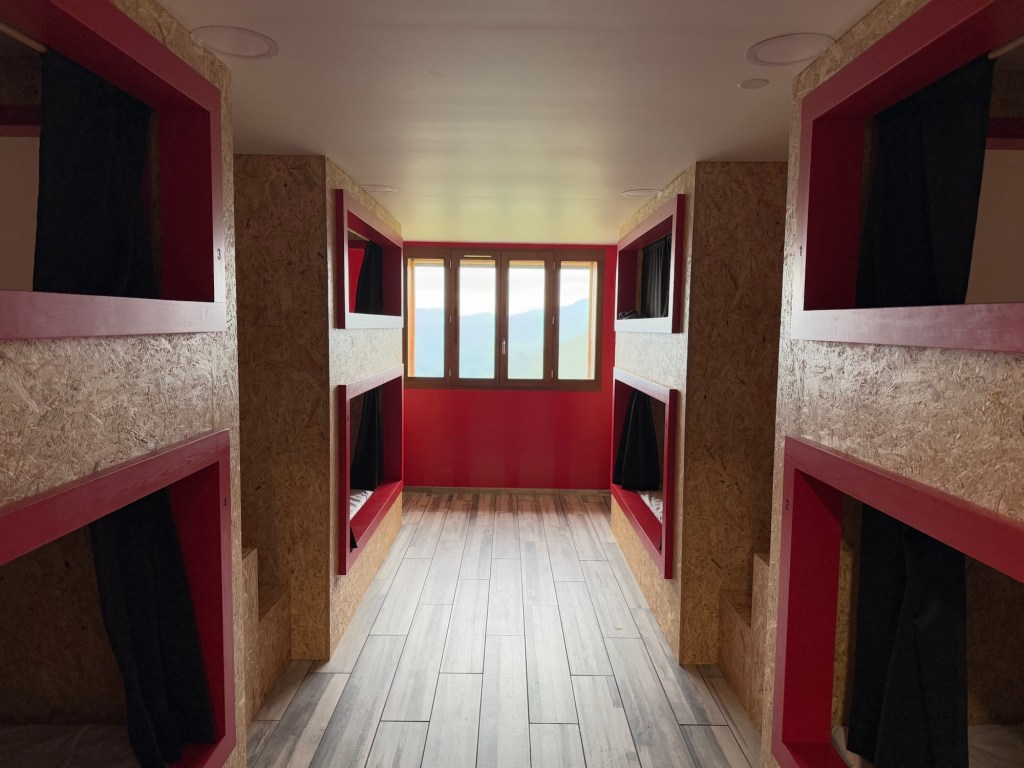
    At 11 a.m., I checked into the hostel early and was assigned to an 8-person bunk room overlooking the Nive Valley. A reservation to stay here must be booked months in advance. The experience is legendary in the pilgrimage community.

    I crawled onto my bed for a nap, fell asleep almost immediately, and didn’t wake until 4 p.m.

    My bunk room at Orisson Refuge

    Due to my short day, Alex, Mark, and Vince, who pushed another 11 miles to Roncesvalles—my destination for tomorrow—are now a full day ahead of me.

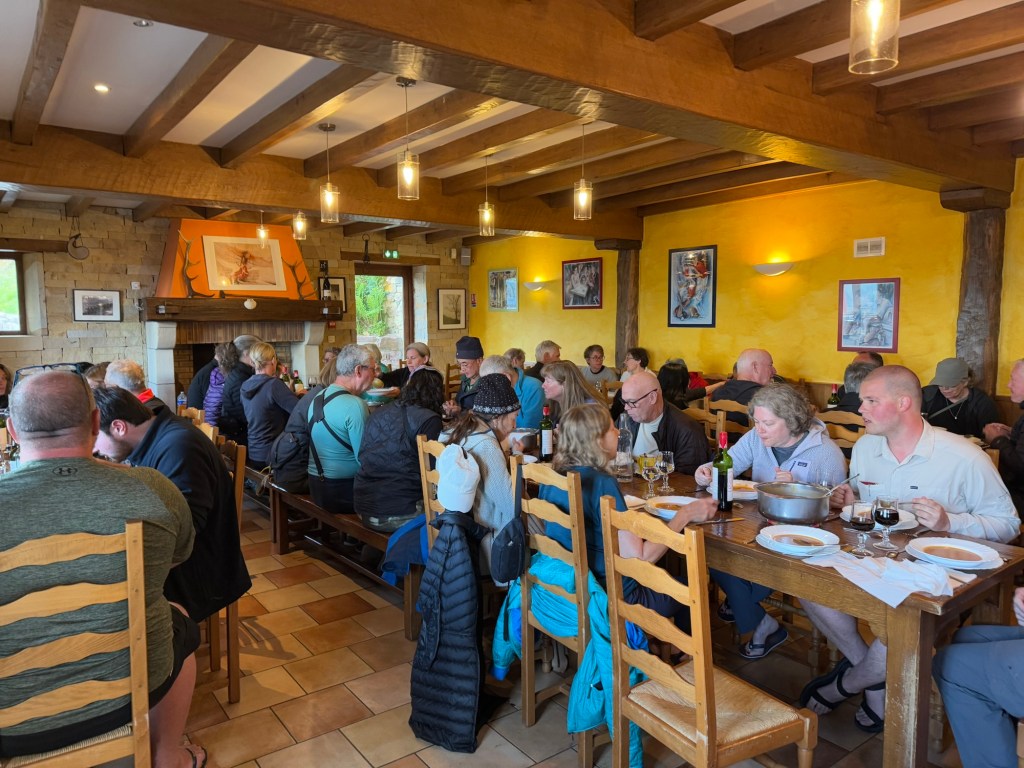
    At 6:30 a.m., all 50 or so guests gathered in the restaurant for a communal three-course dinner: wine, bread, gazpacho, sliced pork with gravy and baked beans, and Basque cake. Afterward, each person introduced themselves and shared their reasons for walking the Camino. Most were in transition—recent graduates, jobless, retirees, or facing midlife crises. Since I’ll likely be around these people for much of my journey to Santiago, these early icebreakers help in finding a group.

    A communal dinner at Orisson Refuge.

    Though it doesn’t get dark until after 10 a.m., we were all in bed by 9.

  • Île-de-France

    Île-de-France

    Of course the trip started with a challenging trans-Atlantic flight. No screaming toddler, but the Air France seats were so hard that sleep was out of the question. To pass the time, I watched a few episodes of La Gaule d’Antoine, hosted by the irreverent and witty Antoine de Causes, a French TV icon known for his sharp humor and knack for uncovering cultural gems. The show, a playful exploration of France’s regional quirks, feels like a French take on Huell Howser’s California’s Gold. My French was just good enough to keep up, and halfway through an episode where de Caunes dove into the world of the ham-and-butter baguette sandwich known as a Parisian, I decided to make finding one my mission during my 14-hour layover.

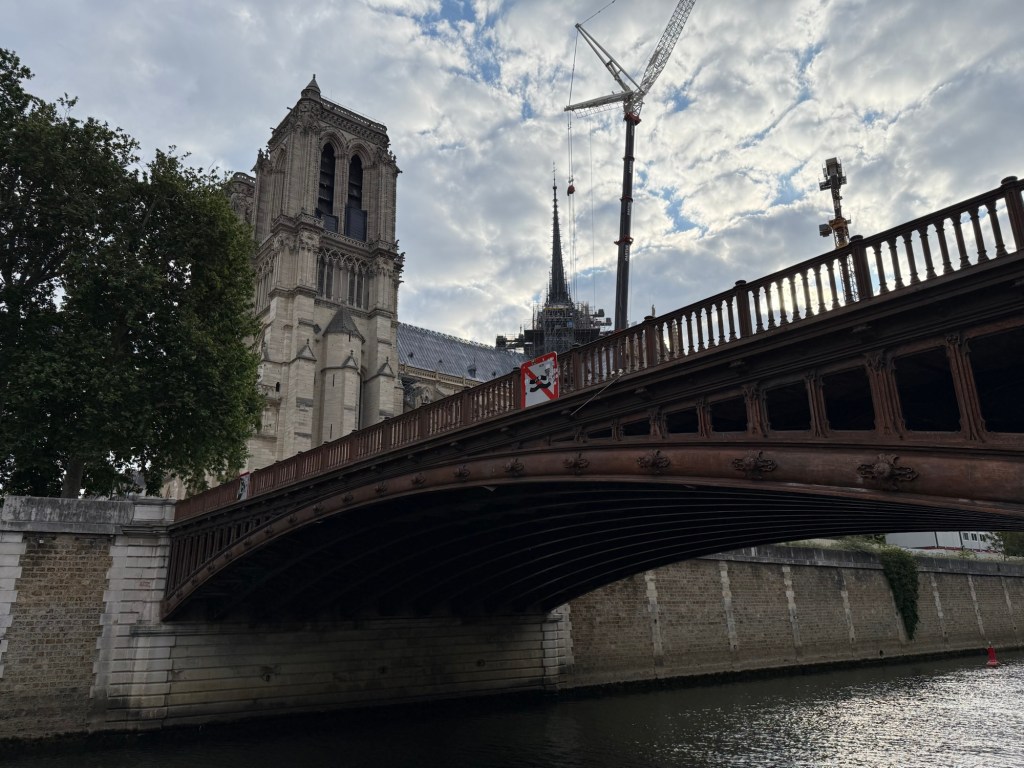
    I landed at Paris Charles de Gaulle at 6 a.m. Clearing customs and catching a train to Notre Dame took two hours. I had a 9 a.m. ticket to enter the church, but on arrival, I found no reservations were needed—walk-ins faced no line. My last visit in 2011 left memories of a dark, dank interior, but the cathedral has been noticeably cleaned up! I did a quick loop inside and left.

    My favorite angle of Notre Dame. That tree needs to be cut back again.
    Morning mass inside Notre Dame

    My plan was to walk to the Eiffel Tower via the Seine and Champs-Élysées. Exhausted from the sleepless flight, I found a green metal lounge chair near Place de la Concorde, known for its Egyptian obelisk, and napped for two hours.

    When I woke, I was hungry. On the Champs-Élysées, I stopped at a coffee shop and grabbed two flaky, buttery croissants. With no interest in shopping, I passed through the commercial district, turned left at the Arc de Triomphe, and headed toward the Seine and Eiffel Tower.

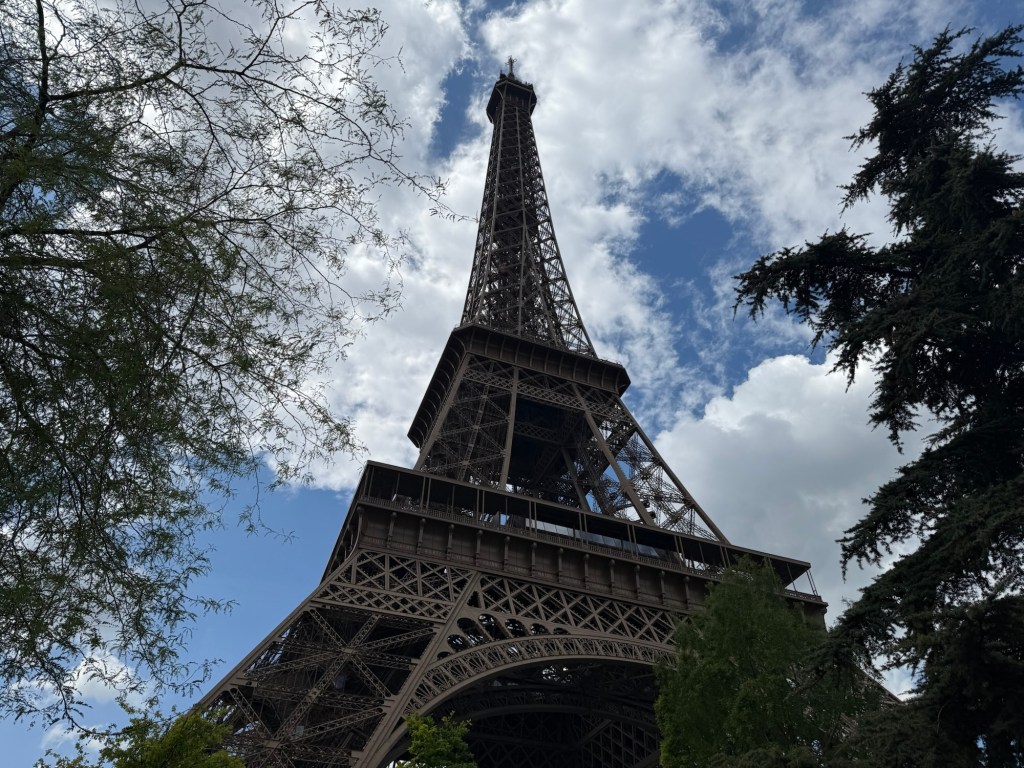
    After crossing the river, I navigated through a checkpoint in the new security barrier around the tower. It was a hassle with my large backpack, but the lack of street vendors and scammers inside was a plus. I found a wooden park bench by a small pond and slept for another three hours.

    La Tour Eiffel

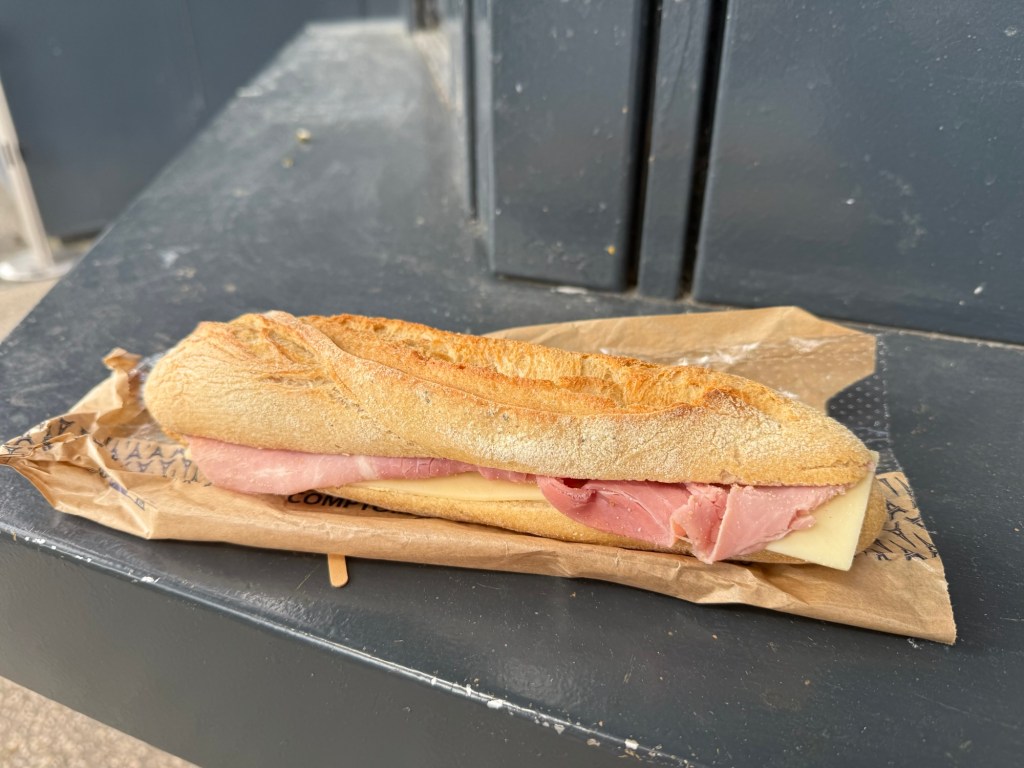
    Refreshed, I went to the food counter and ordered a jambon-beurre. Purists, I imagine, would argue it was not an authentic Parisian due to the addition of Emmental cheese, but it was delicious. Since I’m wearing Invisalign braces, my teeth were too sore to bite through the baguette, so I tore off bite-sized pieces to eat. It felt like the right way to enjoy it anyway.

    Jambon-Beurre aka Parisian (with cheese)

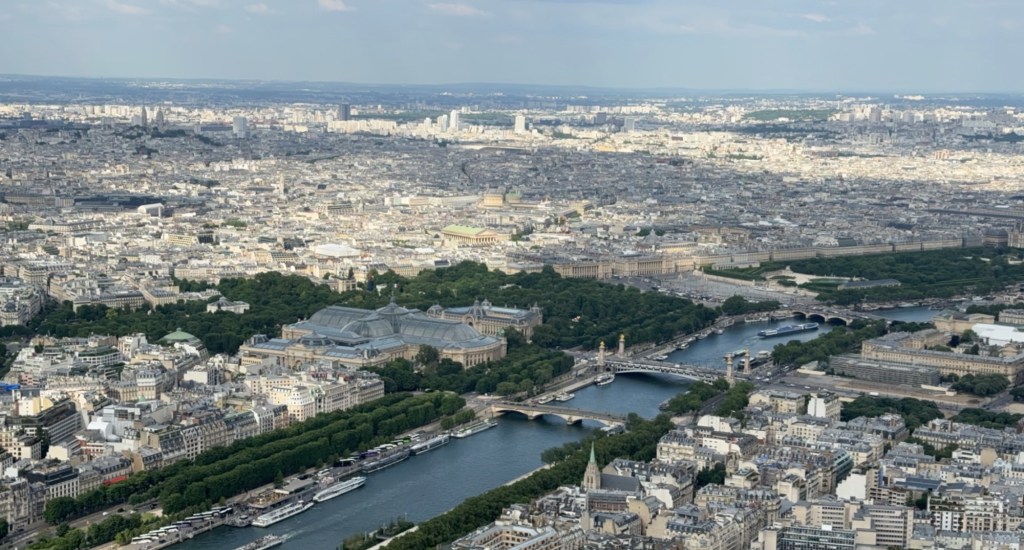
    At 5 p.m. I took the elevator to the top of the Eiffel Tower. I ordered a glass of champagne and spent an hour shooting aerial timelapses of the roads, river, and sidewalks below.

    The view from the top of the Eiffel Tower

    At 6:30 p.m., I departed the tower and took the metro to Paris Austerlitz to catch the night train to Bayonne.

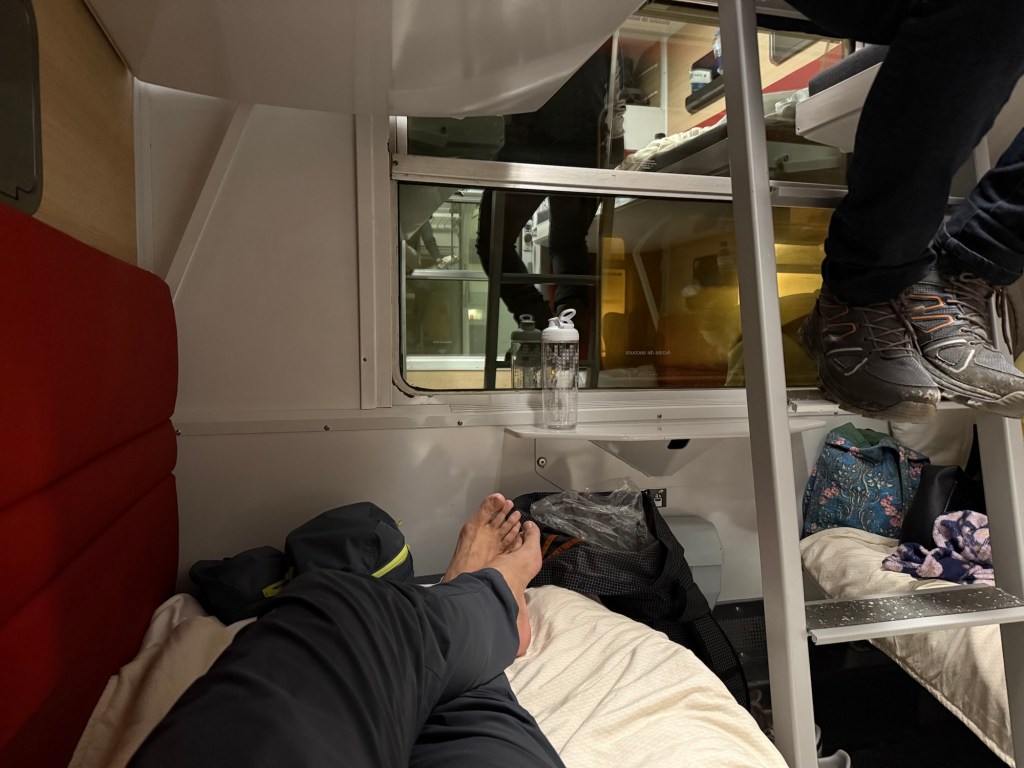
    Intending to use the slow intercities train as a hotel, I booked a first-class sleeper car ticket months in advance. A handful of passengers in the car were also heading to Saint-Jean-Pied-de-Port to start the Camino Frances. I brushed my teeth, plugged my battery bank into an outlet to charge, and drifted off to sleep.

    Midnight train to Gare de Bayonne
  • Paris Bound

    Grades are submitted, the office is empty, and my belongings are in storage. I am finally free.

    My 92-day trip to Europe began this morning when my neighbor Aleth drove me to Tampa International Airport. I went through TSA PreCheck and reached the gate with two hours before my connecting flight to Boston.

    When my boarding zone was called, the gate agent flagged me. My 92-day itinerary exceeded the Schengen Area’s 90-day visa-free limit, so I needed a waiver. I said I’d visit the UK during the trip, which pauses the Schengen clock. The agent wanted proof of a UK ticket, so I booked a $140 one-way flight from Paris to London, showed the confirmation, and got the waiver. In the jetway, I canceled the flight for a full refund. 🤷🏼‍♂️

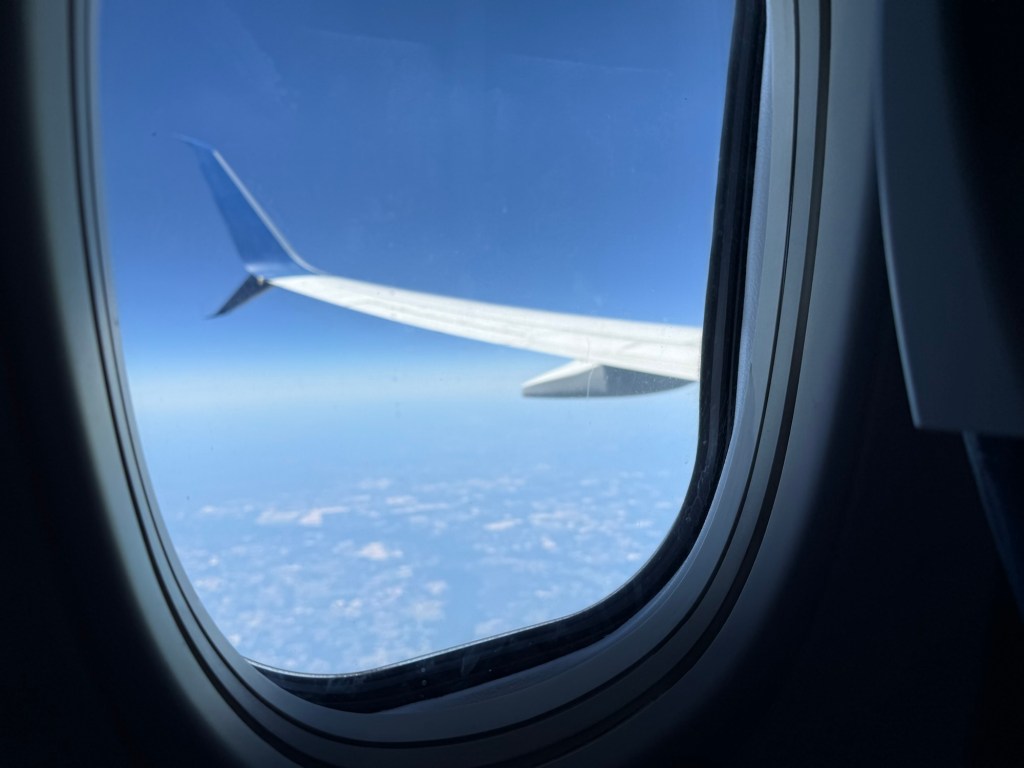
    The hop to Boston was unpleasant. Screams from the toddler seated behind me cut through my noise-canceling earbuds the entire flight. I’m now in Boston with a four-hour layover before my evening flight to Paris, and I hope to God that kid isn’t on the next leg.

  • A Summer Abroad

    When entering the arena of academia in Florida, faculty are typically provided an opportunity to select either a nine or 12 month contract. Whichever option you select is permanent. Four years ago, with a penchant for vagabonding, I chose the former.

    Thus in early May, I will embark on yet another three-month adventure across Europe. I will fly to France, spend a day taking in the sights of Paris, and board the night train to Saint-Jean-Pied-de-Port to begin walking the 800-kilometer Camino Francés — my third trek on this particular route.

    Provided I manage to escape illness and injury, I will then walk the 900-kilometer Camino del Norte before flying to the UK to traverse Hadrian’s Wall and the Coast to Coast walk. I’m scheduled to return home in August via Stockholm, and if time permits, I will hop a train to the northern reaches of Swedish Lapland to re-hike the Abisko to Nikkaluokta section of the Kungsleden.

    I’ve not been great in the past at documenting my travels beyond the first few weeks of a trip — but having recently tripped 40 and staring down the barrel of the second half of my life — I feel obligated to begin maintaining a detailed account of my travels.

    I bought this domain with plans to build a general resource for long-distance backpackers, but I’ll keep things short for now. Up next: The things I will carry.