Category: Uncategorized

  • ¿Cuánto cuesta una cerveza grande?

    I kicked off at 7:40 AM from Cizur Menor, feeling light on my feet after paying 6 euros to have my pack transported to Puente la Reina. The morning started with a steep climb out of Pamplona, made trickier by a 2-mile detour around a washout—likely from the previous day’s thunderstorms.
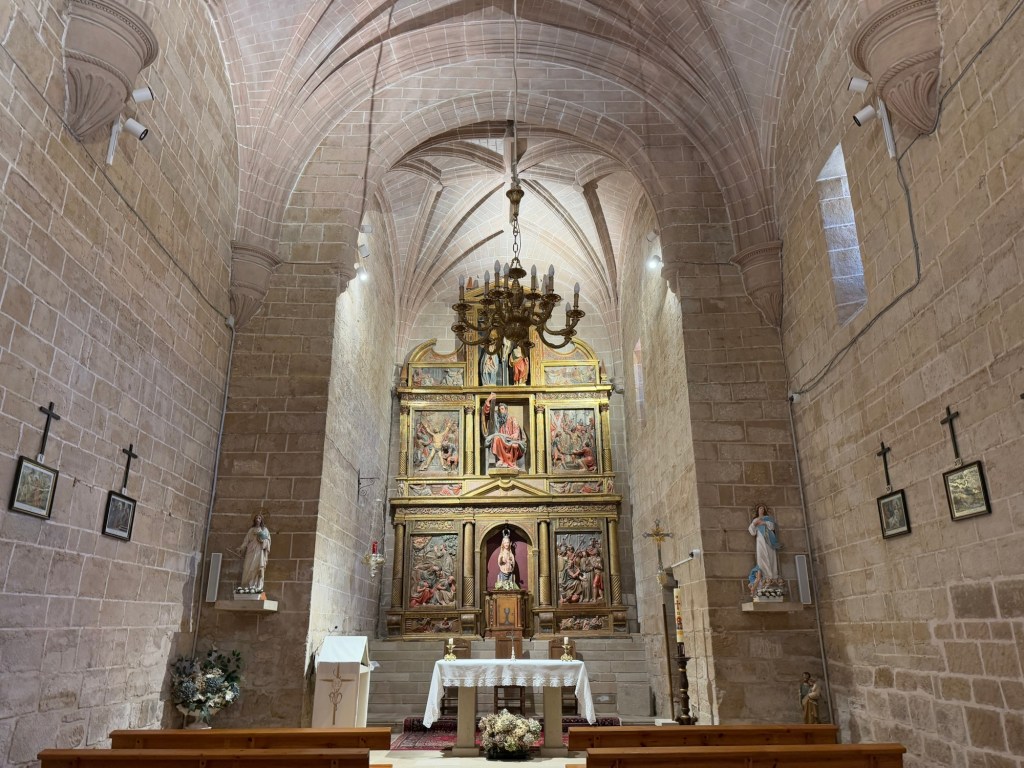
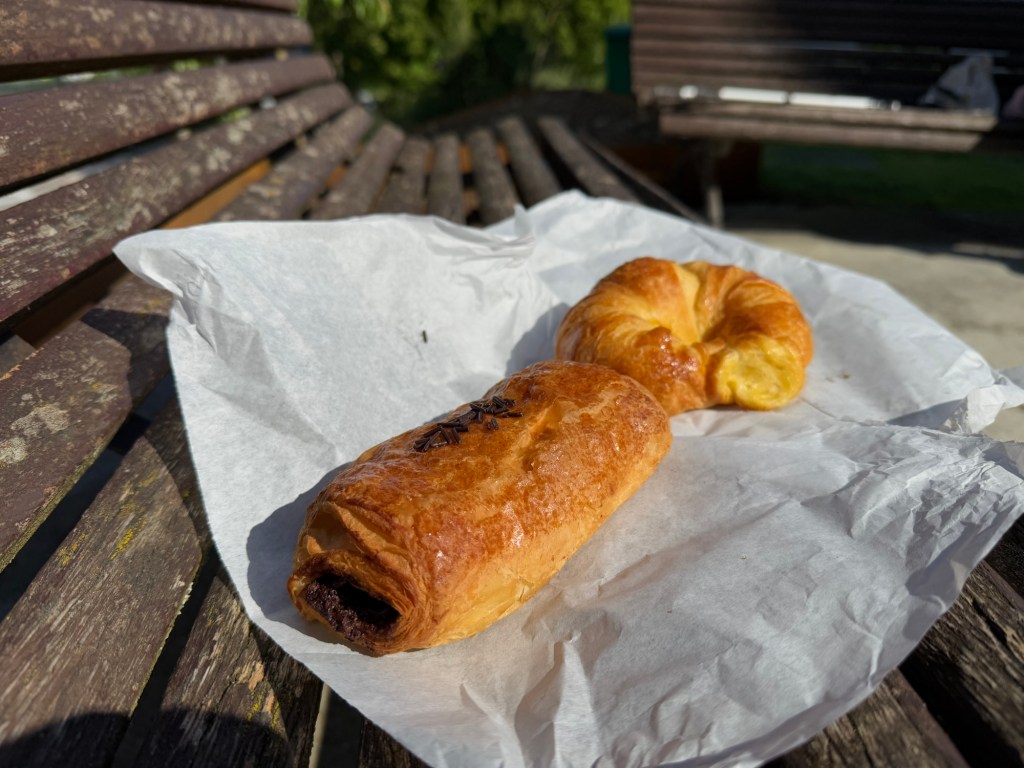
    Three hours in, I rolled into the tiny central square of Zariquiegui. The village’s 12th-century church, San Andrés, caught my eye with its Romanesque arches and weathered stone facade. I spent a few quiet moments inside, admiring the stonework and architecture, before popping into the corner store for a couple of pastries.
    The trail climbed toward the Alto del Perdón, where white windmills loomed larger with every step. In the distance, I could make out the iconic silhouettes of the steel pilgrim sculptures. The rusted figures, pilgrims frozen in mid-stride, are one of the most recognizable public art displays on the Camino Frances. The view was breathtaking.

    The steel statues of Alto del Perdón

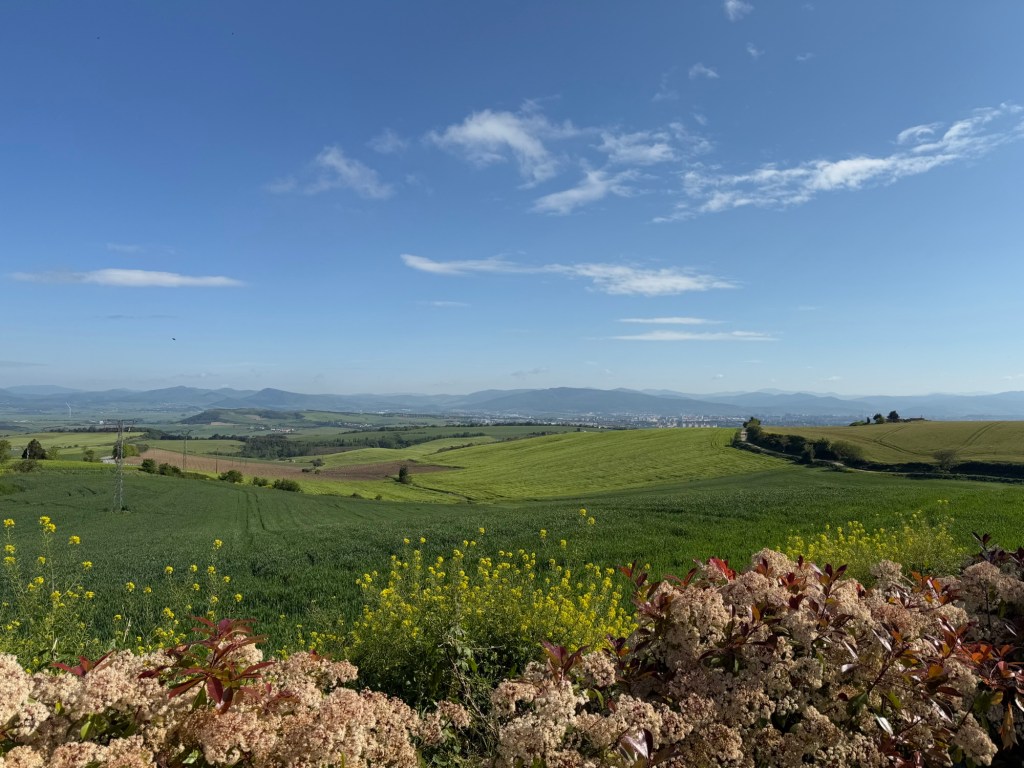
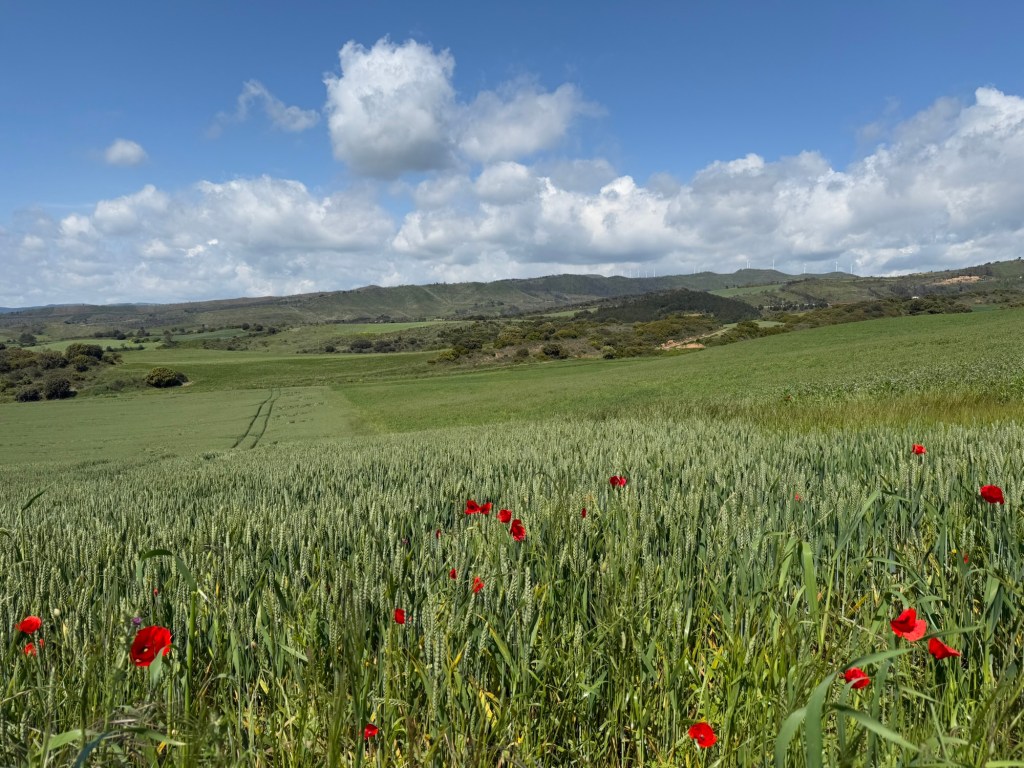
    I scrambled onto a rocky outcrop off the trail and set up my phone to record a timelapse of the windmills and clouds. Then came the descent—a nightmare of loose rocks ranging from pingpong to tennis ball size. Every step threatened to roll an ankle. But as the path leveled out, I was greeted by a sea of green wheatfields stretching all the way to the horizon, dotted with vibrant red poppies blooming along the trail. It was like walking through a painting.
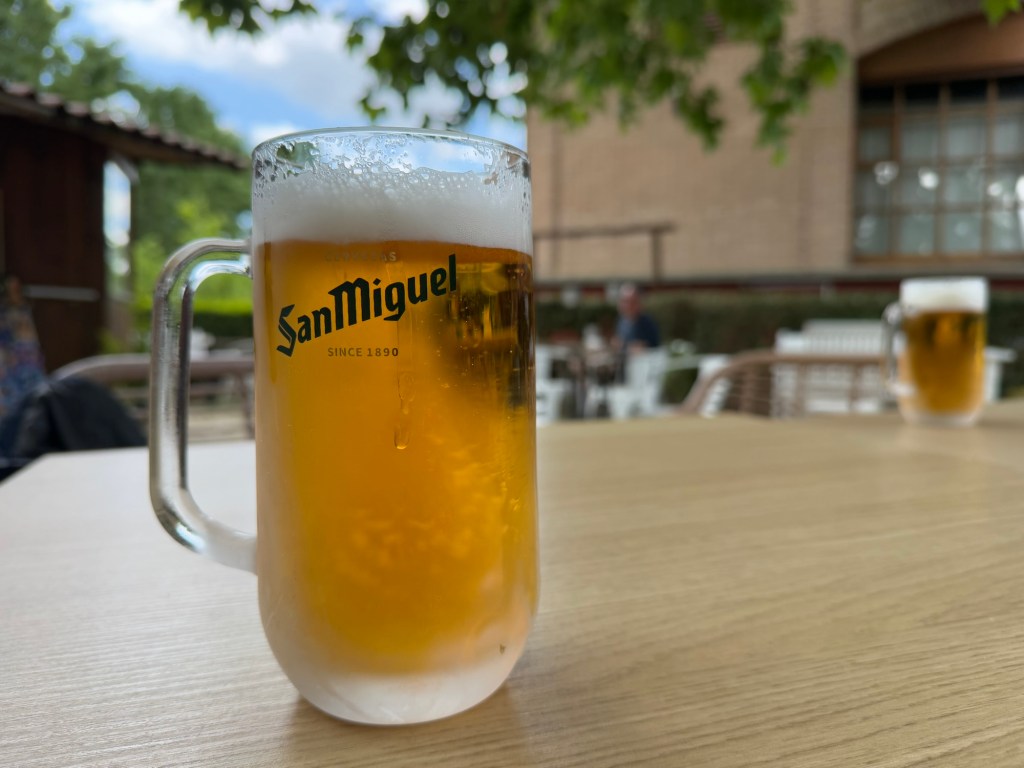
    By 12:30, I hit the small village of Uterga. I pulled up to the bar and ordered a “grande cerveza”—a 16oz draft that set me back 4.50 euros. For a region that appears economically depressed, these beer prices are starting to feel like highway robbery.
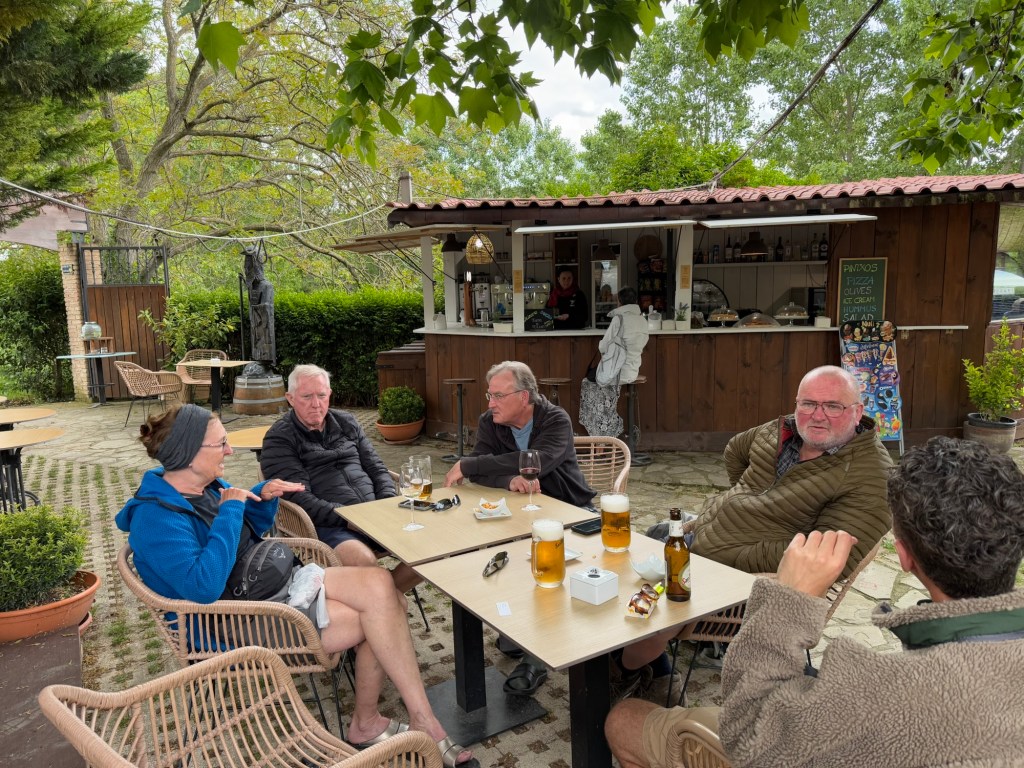
    I breezed through Muruzabal and Obanos without stopping, arriving at Hotel Jakue on the outskirts of Puente la Reina around 2:15 PM. My Apple AirTag showed my pack hadn’t arrived yet, so I joined Tom, a Scottish musician with a knack for storytelling, for a few beers. We dove deep into the history of American and British rock—Dylan and the Beatles, to ABBA and REM. Soon, Scott and Mary, a couple from Brisbane, joined us. Our conversation zigzagged from hiking routes in New Zealand and Australia to a surprising Florida connection: their nephew plays basketball for FGCU, just a stone’s throw from where I used to live near Fort Myers. Beers flowed for four hours, each one costing 6 euros. By the end, I was properly intoxicated and my wallet was noticeably lighter.
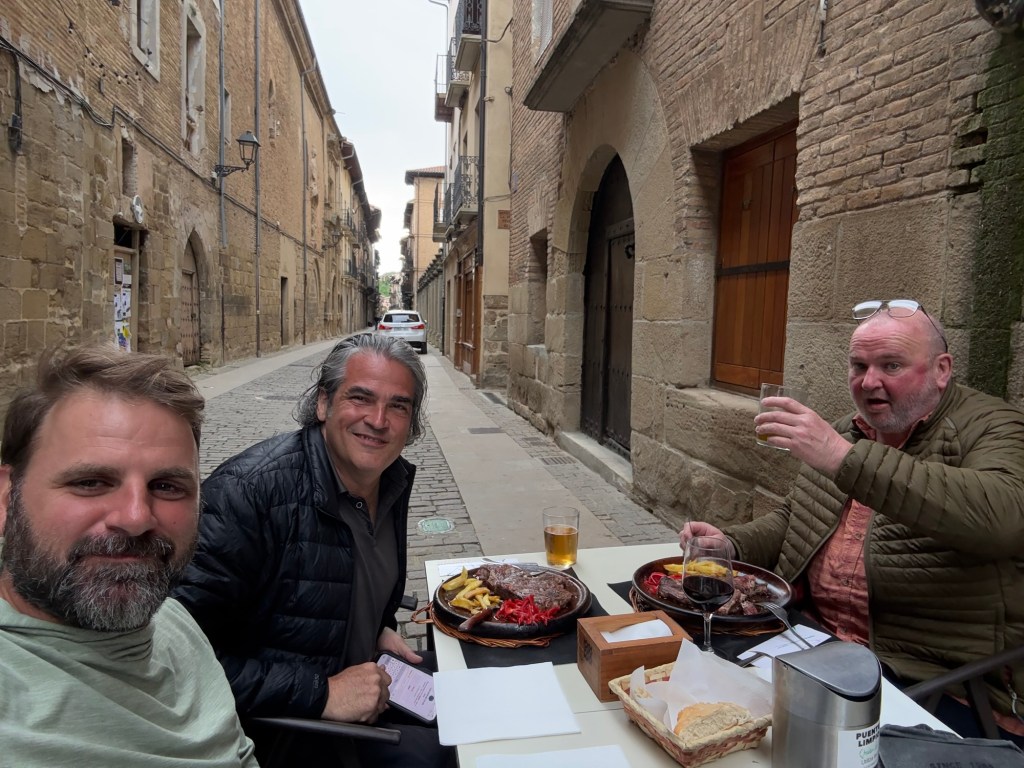
    Around 6 PM, I pinged my AirTag—my pack had finally arrived at Albergue Padres Reparadores, my hostel for the night. I checked in, took a much-needed shower, and made my bed in the dorm-style room. Then I joined Tom and Alex for dinner at a nearby steakhouse. The food was good, the beers kept coming, and by the time I stumbled back to the hostel, I was ready to crash. I passed out on my bunk, the day’s 14+ miles and countless conversations swirling in my head.
    Today was a reminder of why I love walking the Camino: the physical challenge, the stunning landscapes, and the unexpected connections with strangers who feel like old friends by the end of the day. The rocky descent tested my patience, the poppies lifted my spirits, and the beer prices tested my resolve to stick to a budget. Tomorrow, I’ll keep walking, keep talking, and maybe start asking for beer prices upfront.
  • Hemingway, Flamenco, and Forbidden Topics

    Hemingway, Flamenco, and Forbidden Topics

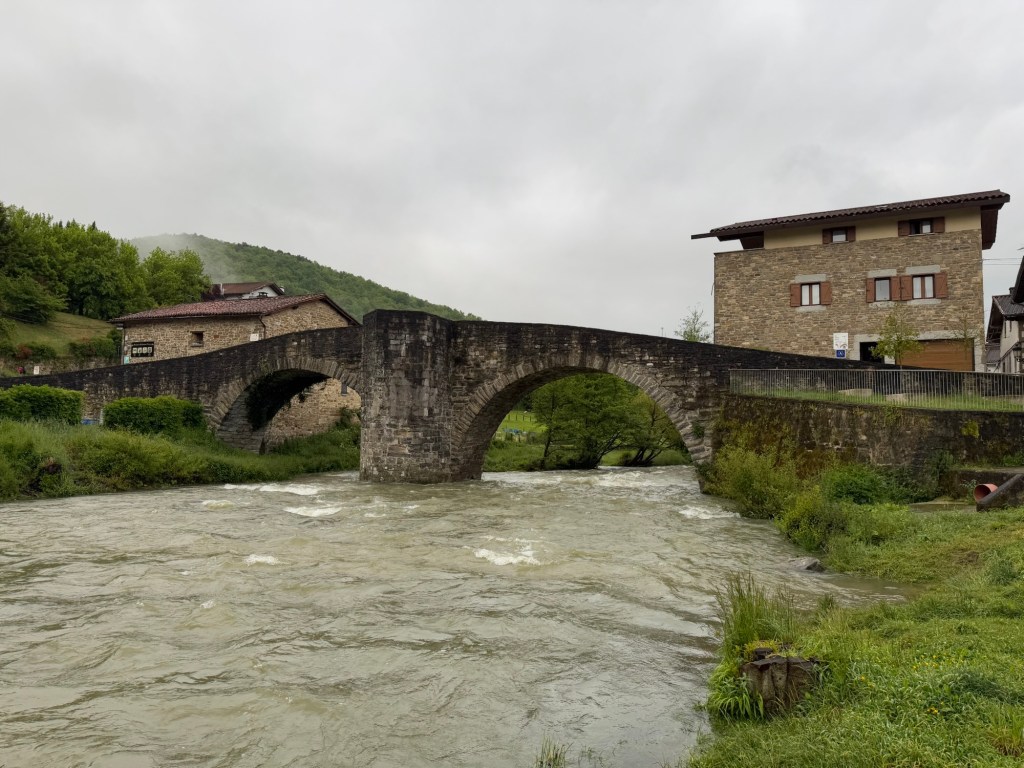
    I woke at 7:15 a.m. to the sound of birds chirping and a swollen Arga river rushing from yesterday’s heavy rains. My calves and thighs were sore from the prior days’ hikes, so I popped a couple Advil.

    The Arga River after a night of rain

    In the kitchen, I perused a Basque guidebook while two pilgrims, Martha from the Netherlands and Mary from Ireland, chatted nearby. Upon learning I was American, they immediately dove into two of the three forbidden topics. Mary asked my opinion on Donald Trump, and Martha wanted to discuss American Evangelism. I sidestepped Mary’s question with Marcus Aurelius’ line, “You always own the option of having no opinion.”

    But Evangelism? I grew up in Lynchburg, Virginia. I explained the core mission of evangelists: to save souls from eternal damnation. Some do this loudly with megaphones and signs at public events, like Westboro Baptist Church, while others take a quieter approach, coaxing neighbors to church functions.

    Martha cut in. “I understand all that. I want to hear about tongues and snakes.”

    Alright, I thought, straight to the good stuff. “Are you familiar with Pentecostalism?” I didn’t bother explaining. I pulled out my laptop, opened YouTube, and played a scene from Sacha Baron Cohen’s Borat—the one where Cohen’s character goes to church to get saved. They weren’t ready. Both women erupted in uncontrollable laughter. Halfway through, when Borat asks if Jesus loves his neighbor, Mary, crying from laughing so hard, begged me to stop.

    “Nobody like my neighbor Nursultan Tulyiagby.”

    I let it run a little bit longer, closed my laptop, and put my pack on.

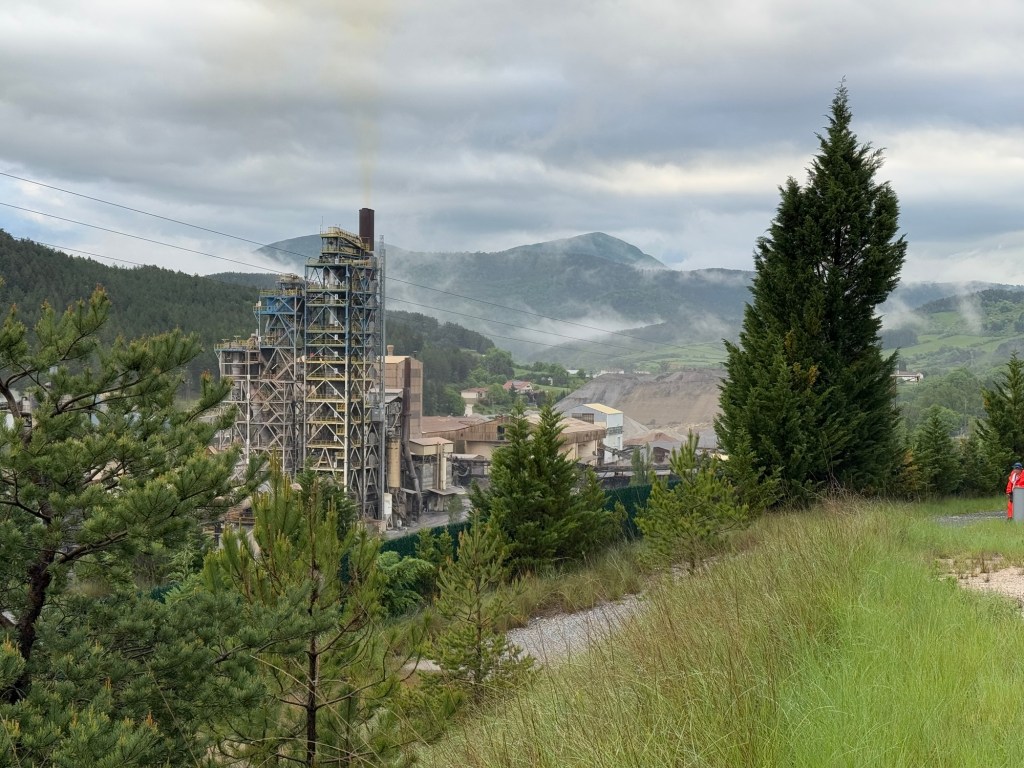
    I set out from Zubiri, passing a magnesium smelting facility a quarter-mile outside town. Cresting a hill, the valley to Pamplona opened before me. The sky was gray, with clouds hanging low over the landscape. The cool air after the rain felt like natural air conditioning.

    Magnesium smelting operation outside of Zubiri

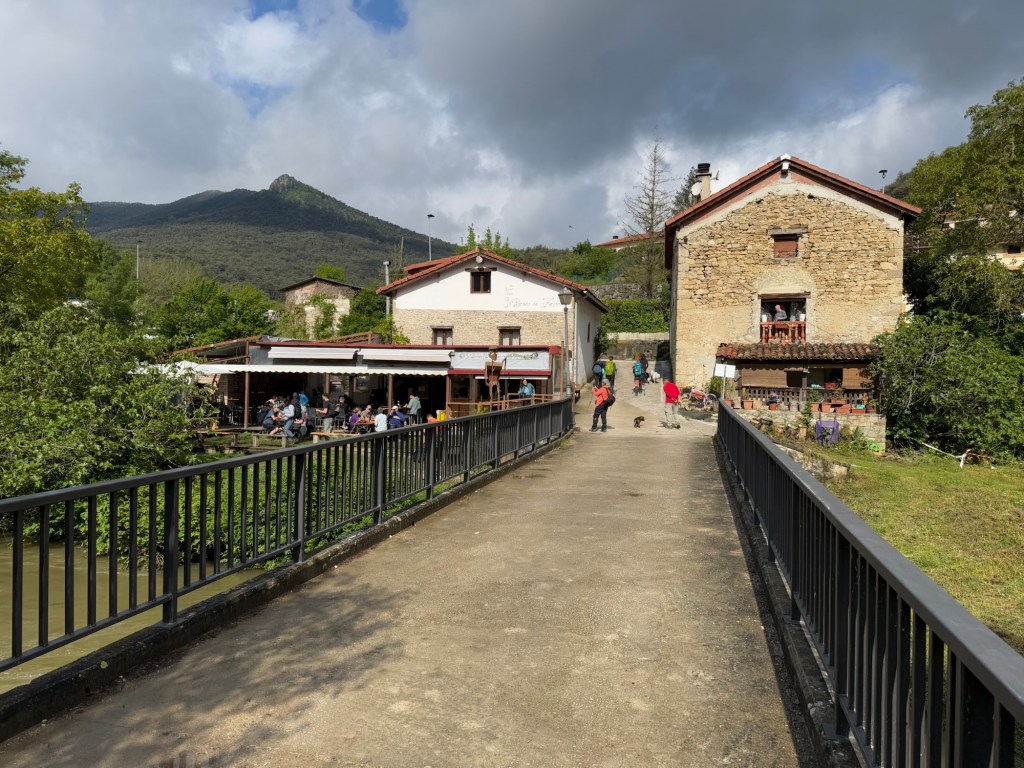
    After five miles, the Camino rejoined the Rio Arga. At 10:30 a.m., I crossed the river at Zuriain and stopped at La Parada, a trailside café, for a roast ham bocadillo. A pair of flamenco guitarists, who appeared to be father and son, strummed away in a corner, their music filling the air.

    Crossing the Arga into Zuriain. La Parada is on the left.

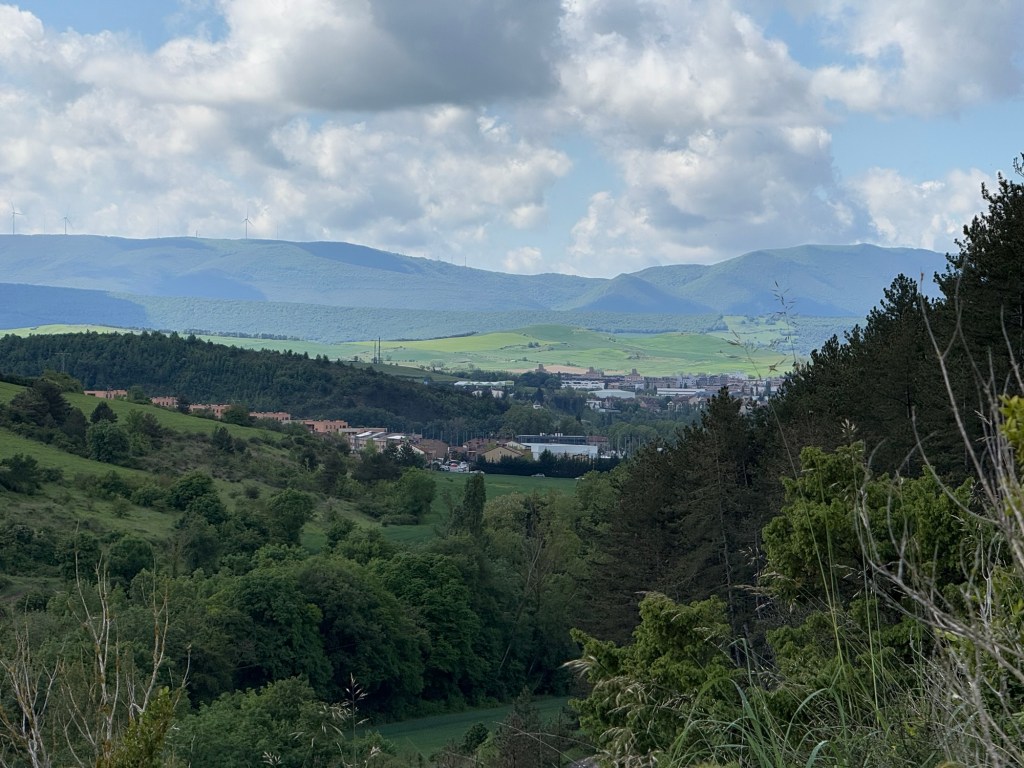
    As I approached Pamplona, the trail climbed up the side of a ridge above the Arga and passed through a gorge. The path rounded the mountain to the west, revealing the first glimpse of Pamplona—a small cluster of white stucco-on-stone buildings with red tile roofs at the base of a lush green hill. Another turn to the southwest brought the city proper into view.

    The northern outskirts of Pamplona

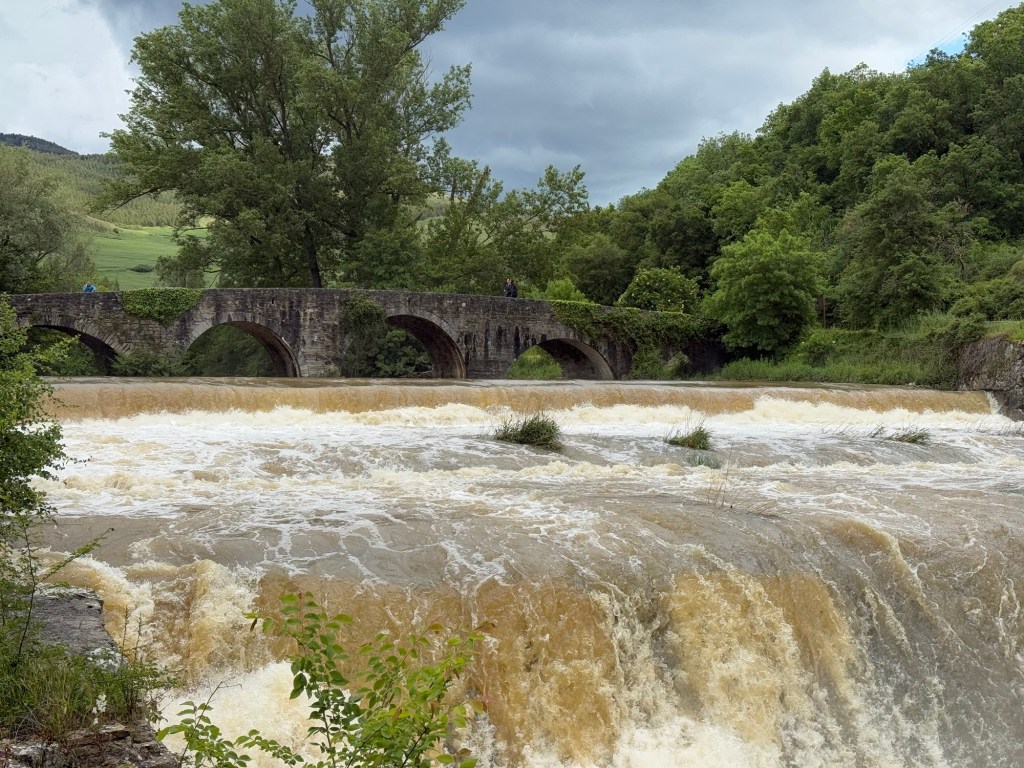
    I crossed the medieval Trinity Bridge over a swollen Ulzama River into Villava. During the short distance from the river to Pamplona, I walked into a gigantes y cabezudos performance. Literally, giants and big heads. It’s a tradition which apparently goes back centuries.

    Trinity Bridge on the Ulzama River

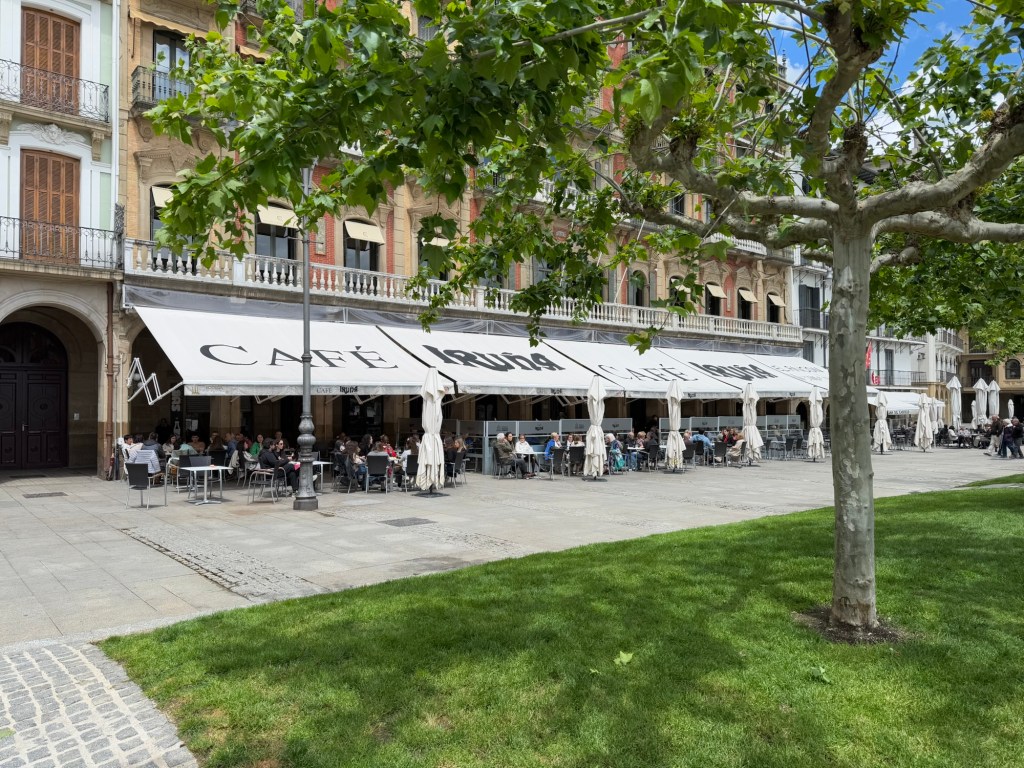
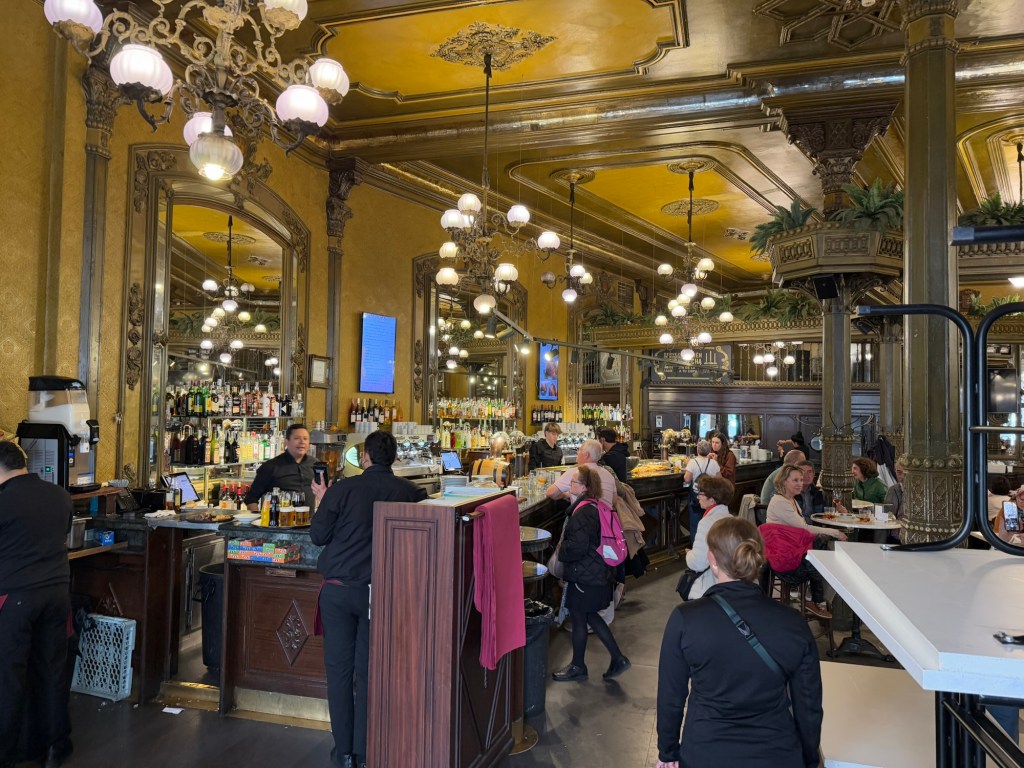
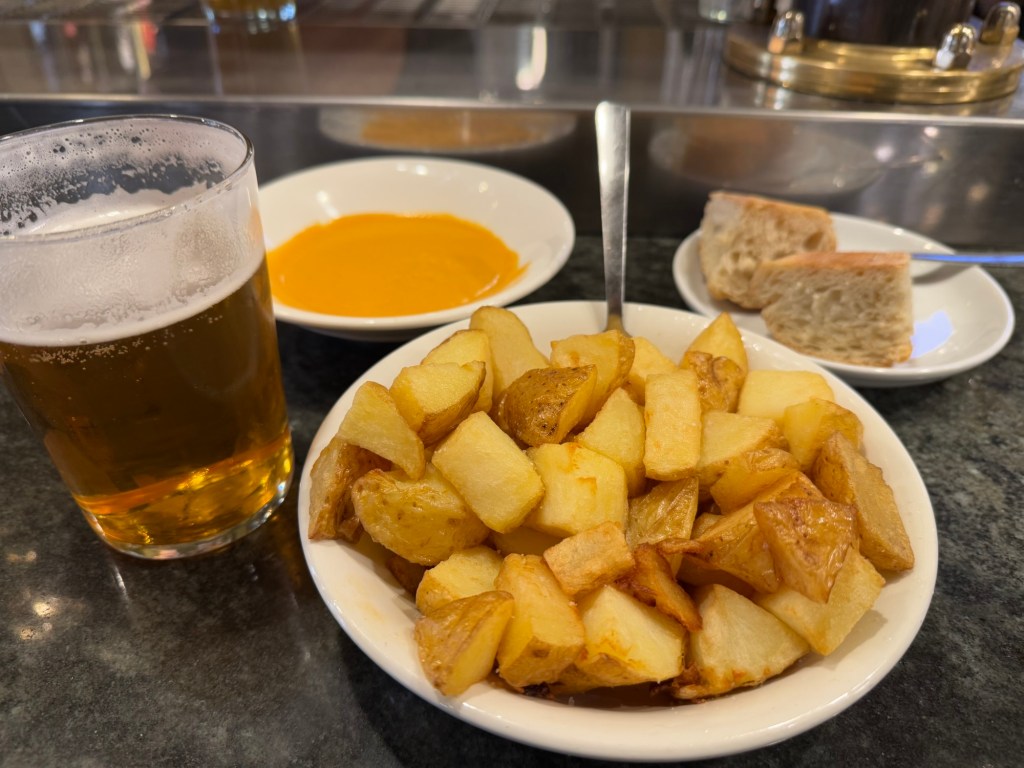
    After that bit of distraction, it took me about an hour to reach the city center. I walked into Café Iruña, saddled up to the bar, and ordered a cerveza, patatas bravas, and tarta de manzana—all recommended by fellow pilgrims. One step inside, and it’s clear why Hemingway spent so much time here. Places like this, with their timeless charm, just aren’t common anymore.

    Cafe Iruna
    The interior of Cafe Iruna
    Patatas Bravas

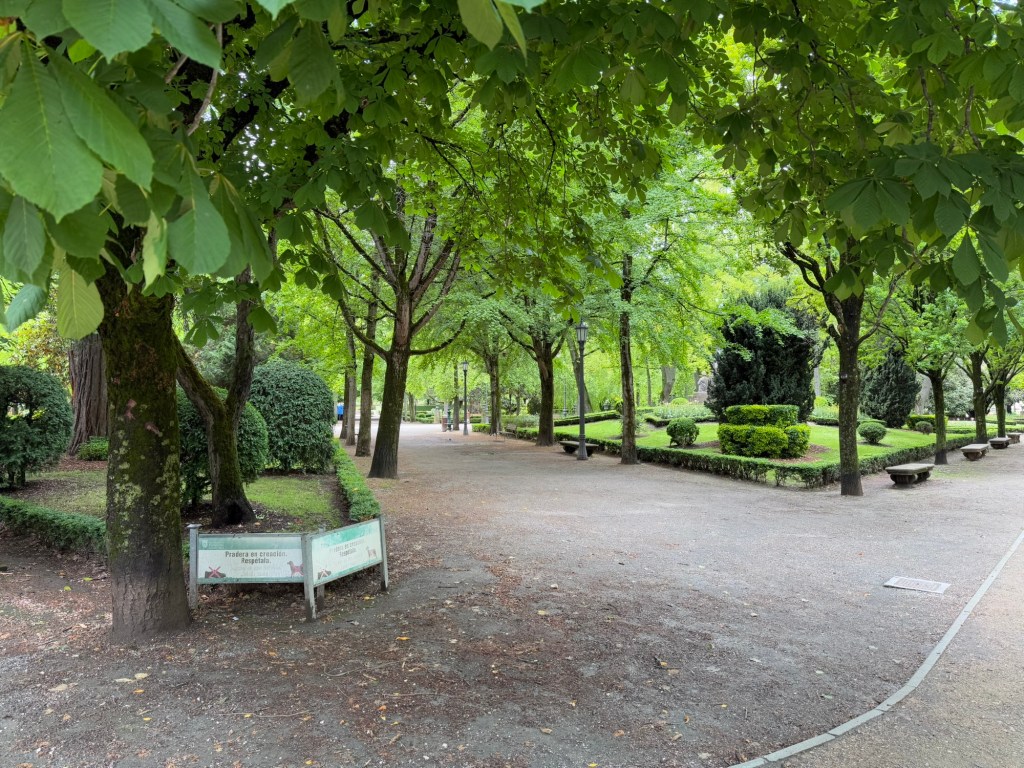
    After a quick meal, I stuck to my original plan and hiked another two miles to Albergue Sanjuanista de la Orden de Malta in Cizur Menor. Along the way, the trail passed through the University of Navarre. It may just be one of the most beautiful campuses on earth.

    The grounds of Universidad de Navarra

    At 3:45 p.m. I arrived at the hostel, took a shower, and did a bit of laundry in an outdoor sink. I’ve stayed here before—it’s spartan, but adding these extra miles today sets me up for an easier walk to Puente la Reina tomorrow.

    Pamplona
  • The Sun Also Rises

    The Sun Also Rises

    I woke at 6:30 a.m. to the sound of church bells and chanting monks, punctuated by a Dutch hospitalero ringing a small red bell to rouse any lingering sleepers across the floors. For €15, you get a bed, but not a late checkout—hospitaleros need time to reset nearly 200 bed spaces for the day’s incoming pilgrims. I was packed and out the door by 7:15 a.m., heading 14 miles southwest to Zubiri.

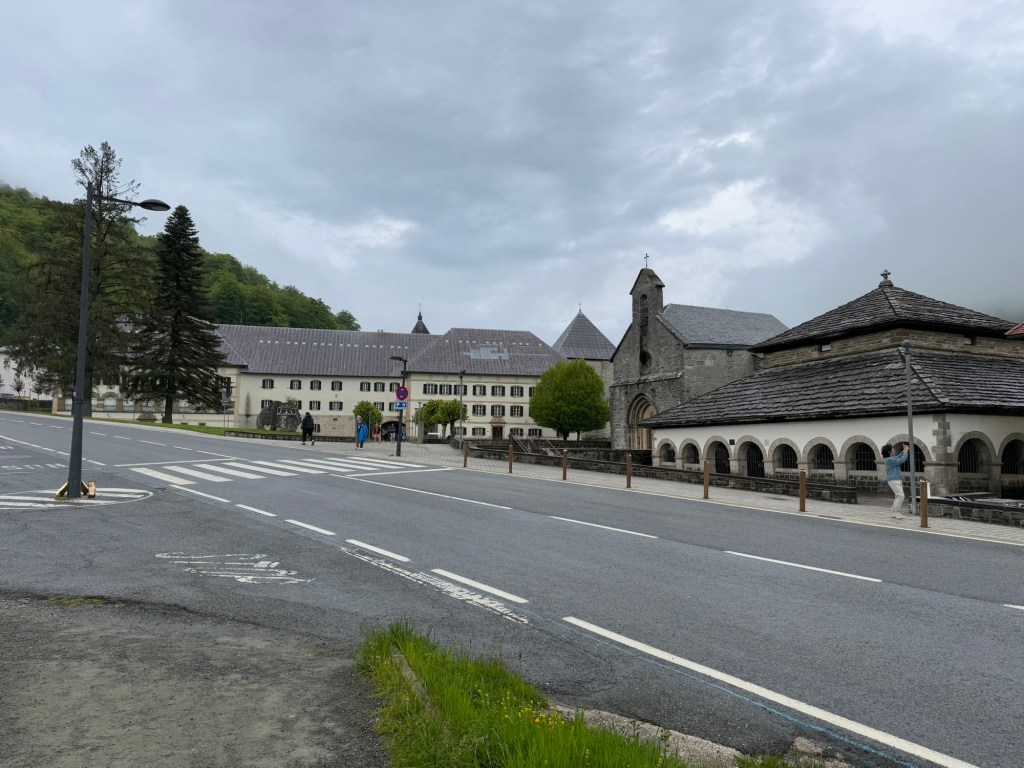
    Roncesvalles Monastery

    Leaving the monastery, I followed a dirt path running parallel to the main road toward Burguete. The air was alive with the chirping of birds, their songs echoing through the surrounding forests of oak and beech. The early morning light filtered through the trees, casting a soft glow on the path ahead.

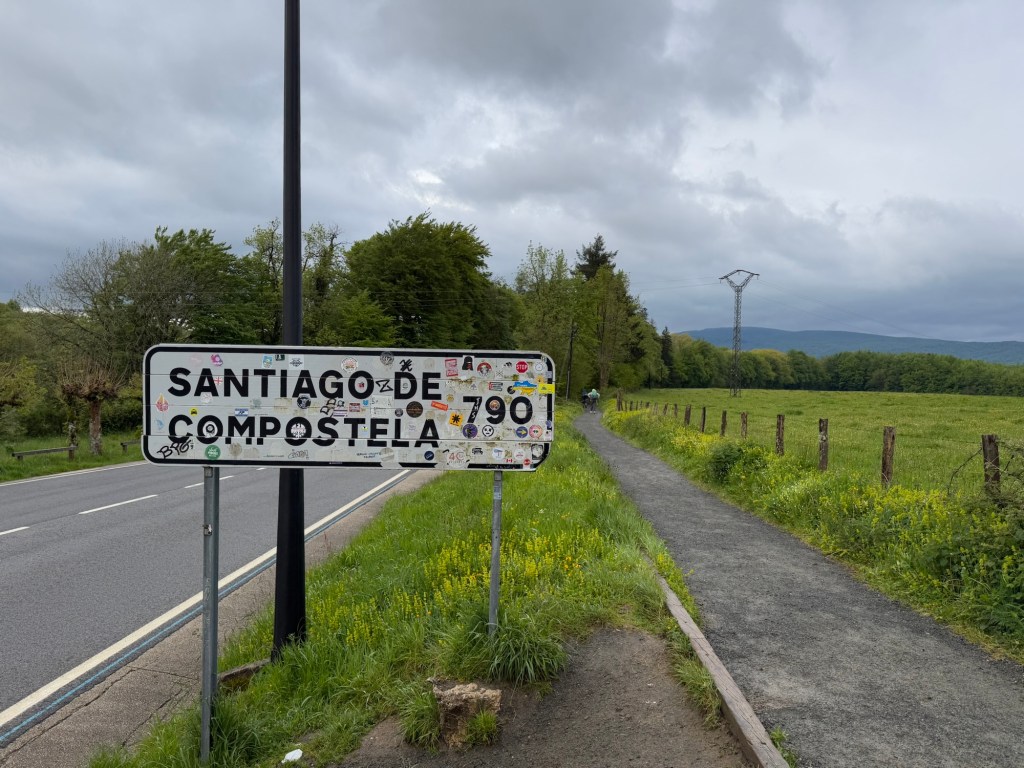
    A sign outside the monastery show the distance, by car, to Santiago. It’s one of the most photographed places on The Camino

    This area holds a special place for me because of its prominence in Hemingway’s The Sun Also Rises. The Roncesvalles monastery gets a mention as the characters pass through en route to Burguete, one of the novel’s key settings. Hemingway visited at least twice to fish the Irati River for trout—in 1924 and again in 1925, just before Pamplona’s San Fermín festival, a century ago. The landscape likely looks much as it did then. Without Hemingway’s spotlight, Burguete might be best known for a grim 16th-century episode when five alleged witches were burned at the stake.

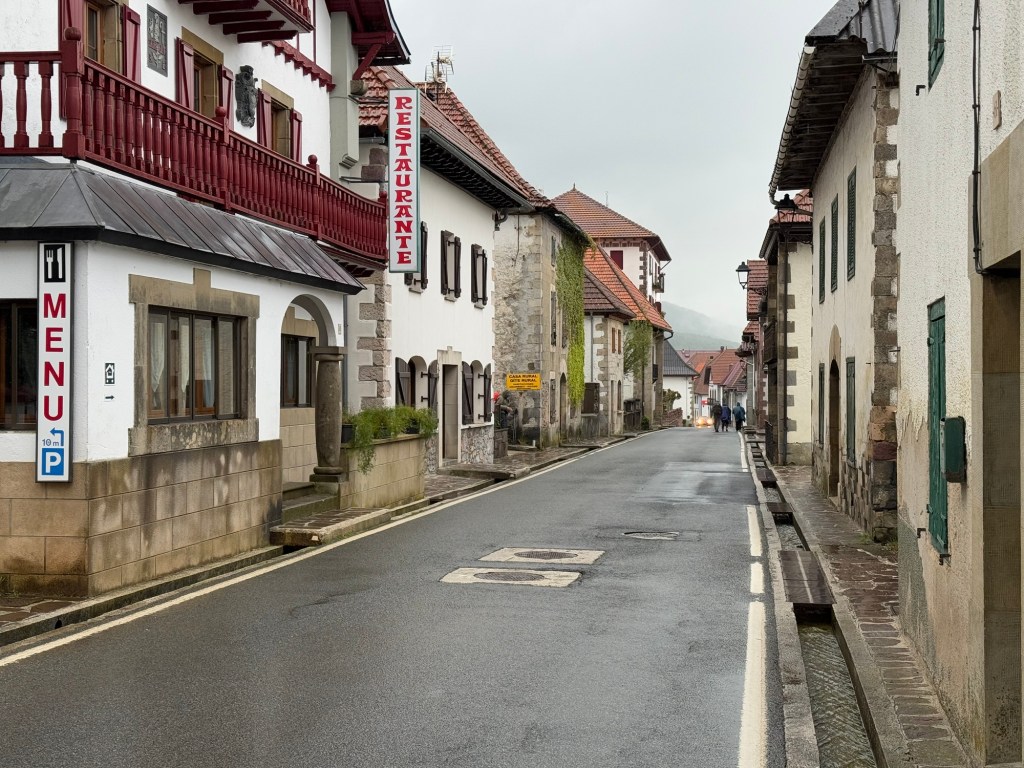
    The main thoroughfare through Burguete

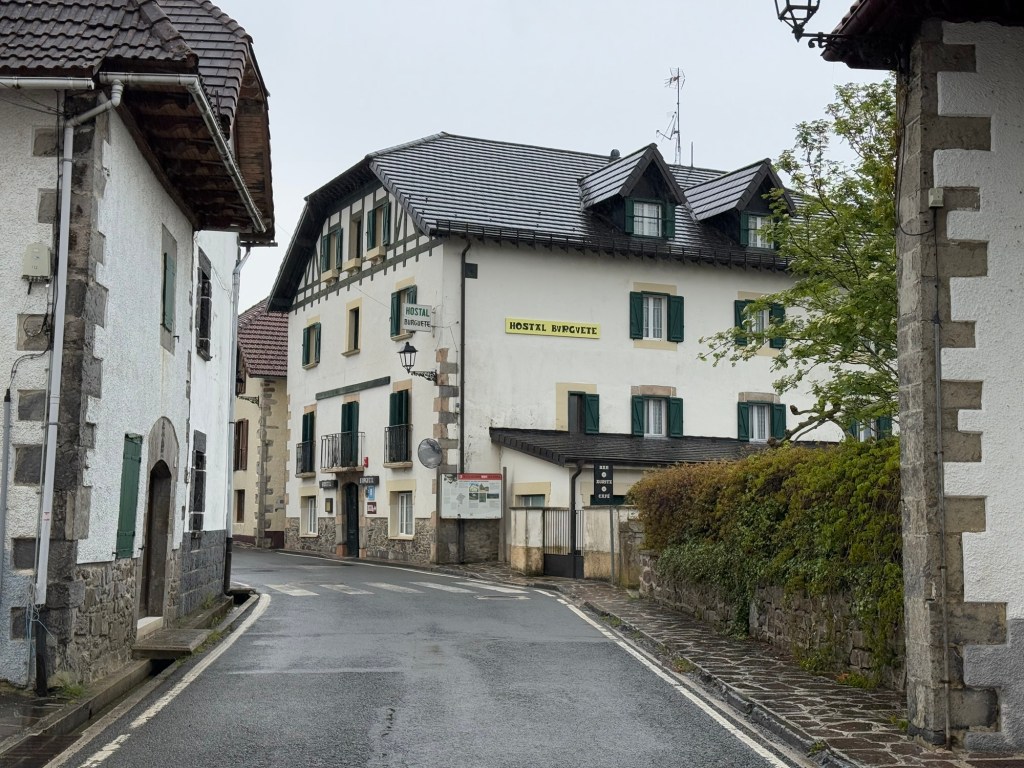
    I reached Burguete around 8 a.m. and took a few photos of Hostal Burguete, the hotel where Hemingway, his wife, and friends stayed. I’d love to book his room on a future visit.

    Hostal Burguete hosted Hemingway in room 23 during his visits to the area

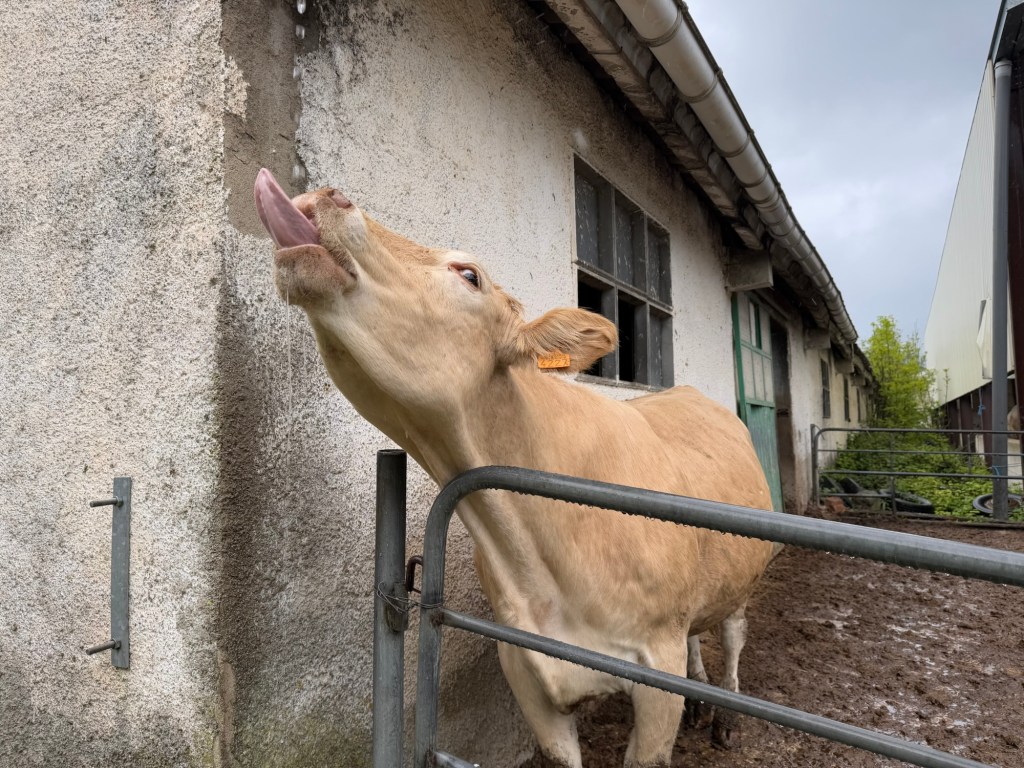
    Leaving Burguete, I approached a barn full of cows. As I passed, one cow walked toward the fence, seemingly to meet me. I thought it might want head scratches, but it was only interested in the fresh water leaking from the rain gutter.

    That’s one strange cow.

    I didn’t linger—severe thunderstorms were forecast to start at noon, and I was determined to secure a bed at the Rio Arga Hostel in Zubiri, which overlooks the river and has been on my list of places to stay for years. I’d messaged the owners the night before for a reservation, but they requested my credit card number and expiration date via WhatsApp to confirm. Unwilling to share that information over chat, my best option was to arrive first.

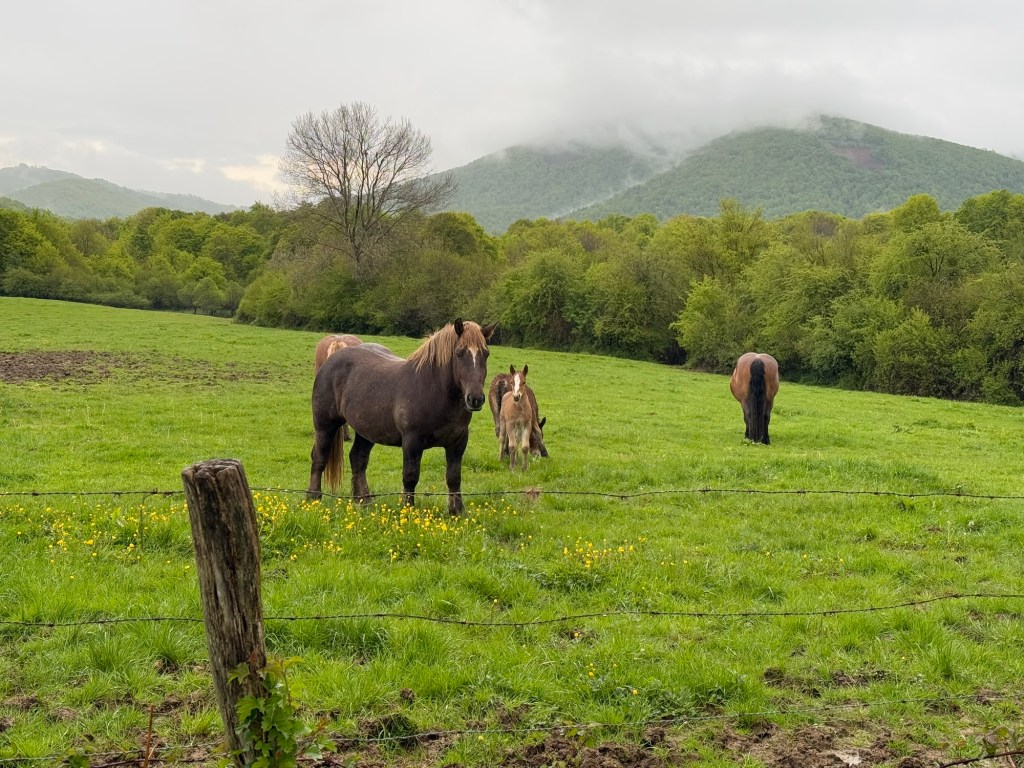
    Not so fun fact: Spain is the leading producer of horse meat in the EU. Roughly 88% of this production originates in the northern provinces.

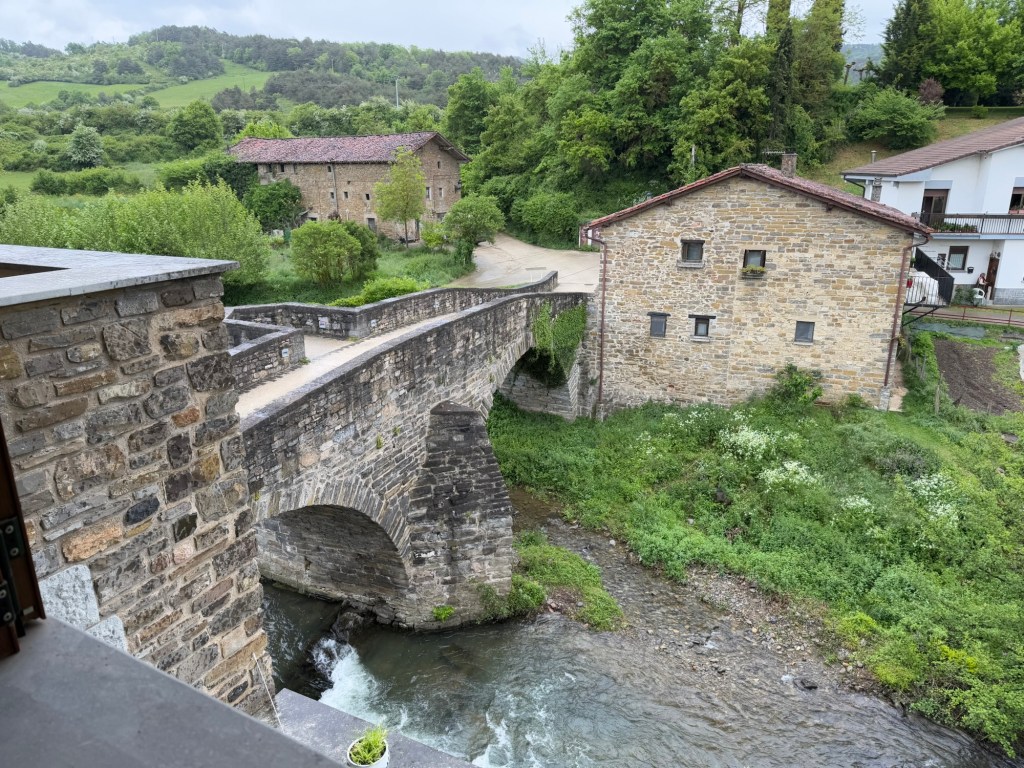
    I powered through the day, stopping only for water and to don a poncho during a brief period of drizzle. The terrain was mostly downhill, but carrying my pack made the minor uphill sections noticeable. I arrived in Zubiri at half past noon, crossed the 12th-century Gothic “Bridge of Rabies,” and entered Albergue Rio Arga Ibaia. I beat both the rain and the crowd, becoming the first to check in. The owner, Sabina, had me in a room overlooking the bridge and river in under five minutes. Hospitaleros could learn a thing or two from her.

    The view of The Bridge of Rabies and the Arga River from my room.

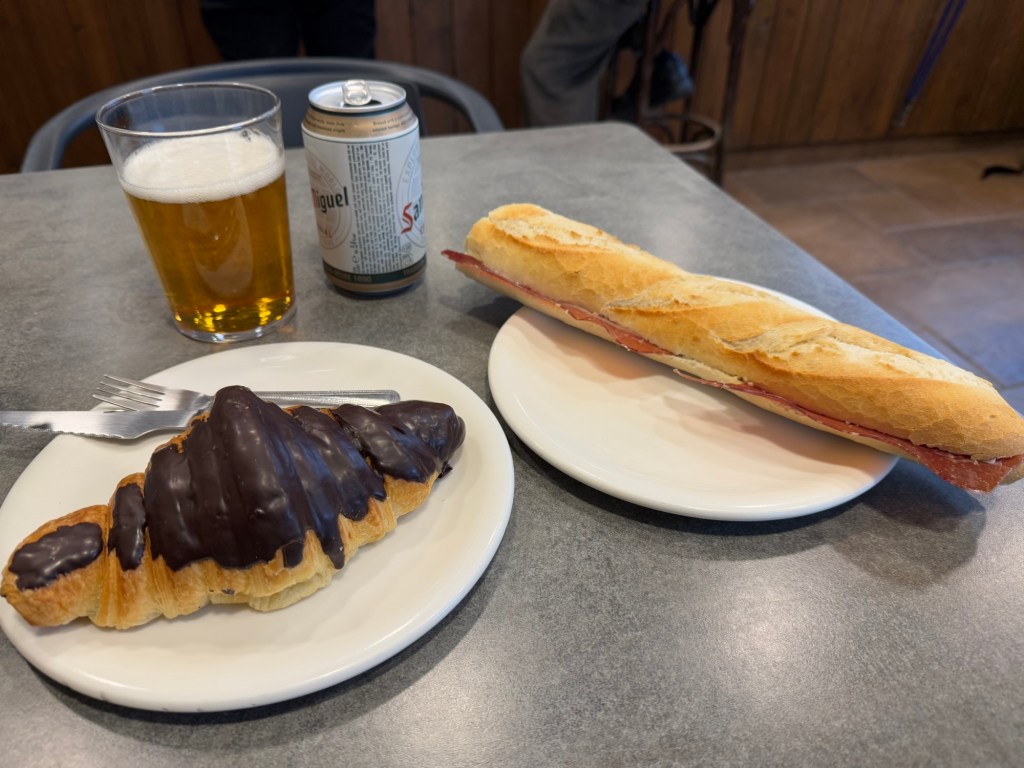
    Spain’s Saturday is like the American South’s Sunday—most places are closed from mid-afternoon until morning. After stowing my gear in a locker, and before businesses shuttered for the day, I walked a few blocks to Txatxoberri, a bakery, for a ham and cheese bocadillo, beer, and a chocolate croissant the size of my head. As I ate, the skies opened, and rain poured down. I dashed across the street to the town’s only grocer, grabbing beer and ingredients for Alfredo pasta for dinner, then sprinted three blocks back to the albergue to avoid getting soaked.

    Lunch at Txatxoberri

    I’m haven’t decided where I’ll end up tomorrow, but I’m thinking of passing through Pamplona to a hostel in Cizur Manor, stopping only to grab a drink and a bite to eat at Café Iruña—one of Hemingway’s favorite haunts.

    An audio version of The Sun Also Rises is available free on YouTube:

  • Saint-Jean-Pied-de-Port

    Saint-Jean-Pied-de-Port

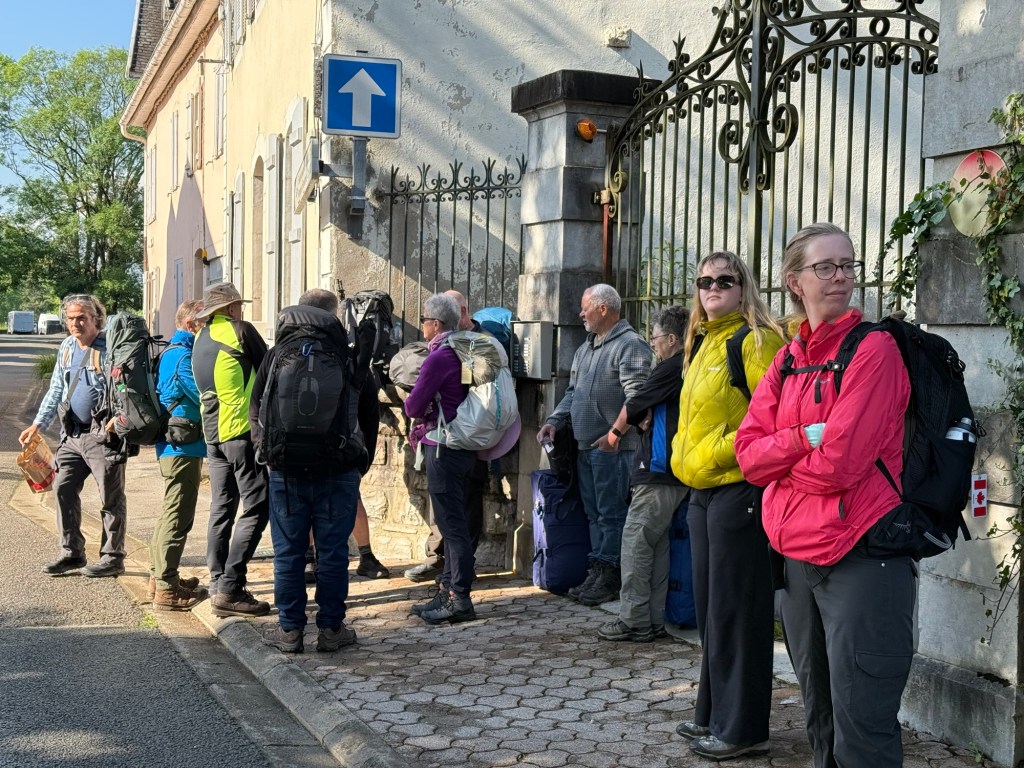
    I woke at 7 a.m., about twenty minutes before the night train pulled into Bayonne. At the station, a crowd of pilgrims were clustered around the departures board. The morning train to Saint-Jean-Pied-de-Port, the start of the Camino Francés, had been canceled due to an impromptu French train strike. I checked Google Maps for alternatives and found a bus route—lines 41 and 61—that would get me to Saint-Jean by 11:30 a.m. for just €3.80. Taxi drivers outside were charging €120–€300 for the 45-minute ride, so the bus was a no-brainer. I shared my plan with a small group of pilgrims I’d met since Paris, and a few minutes later, I was leading a dozen or so pilgrims across the river to the bus stop.

    Waiting for our second bus in Arrabotü Handia

    The 41 bus to Arrabotü Handia arrived on time, and within fifteen minutes, the 61 bus to Saint-Jean pulled up. The drive through the Pyrenees was striking—lush green peaks towering over quaint Basque villages.

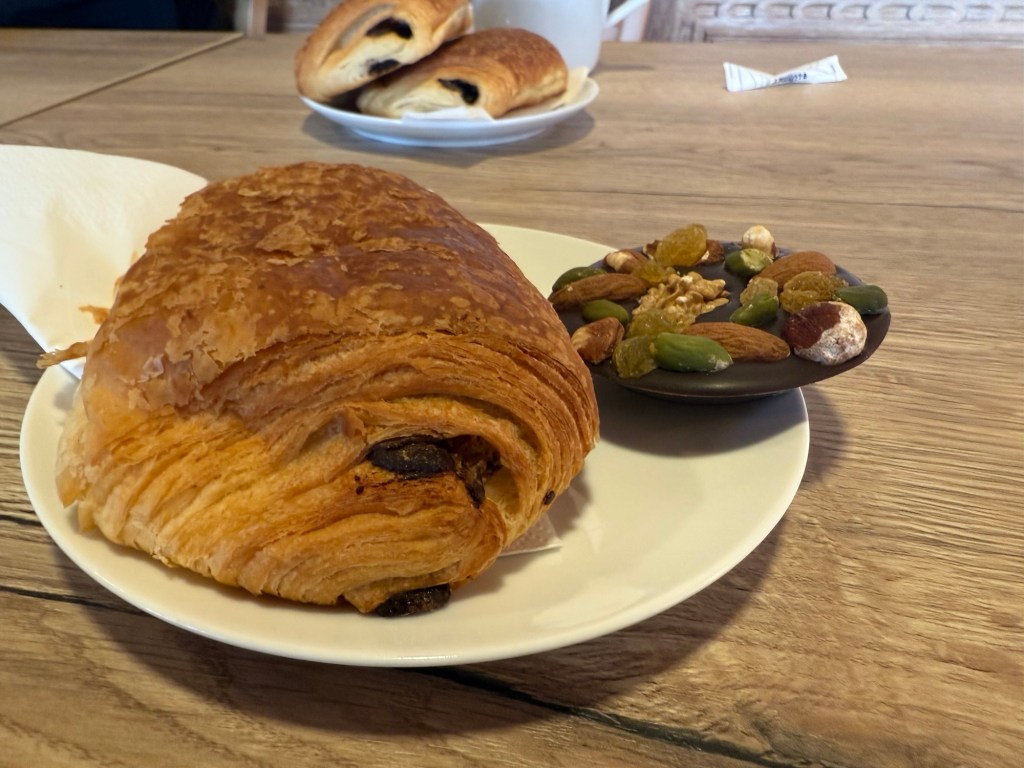
    Three guys I’d chatted with—Vince and Graham from Perth, Australia, and Alex from Austin, Texas—joined me for the walk from the bus stop into town. We stopped at a bakery for chocolate croissants and coffee, then headed to the pilgrims’ office for our Camino credentials and first stamp.

    Chocolate croissant and dark chocolate nut cluster from Barbier Millox – Artizarra

    We found the office closed for lunch, so we split up for an hour to sort out lodging. The front-desk clerk at my hostel let me store my bag in a locker despite check-in not being until 4 p.m., saving me the hassle of lugging it around. Alex, who hadn’t pre-booked, reserved a bed online and stored his bag there too.

    Saint-Jean-Pied-de-Port

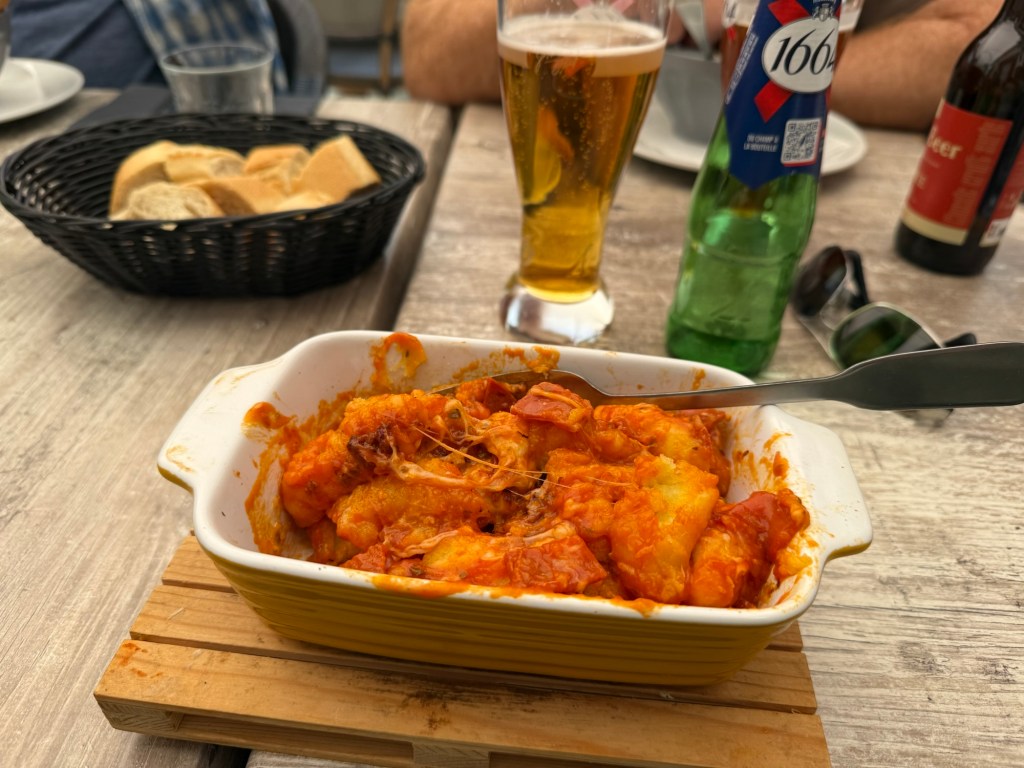
    At 1 p.m., we met for lunch at Comme a la Maison, joined by a fifth pilgrim, Tony from Japan. Interestingly, Tony had lived in both Austin and Perth, connecting him to Alex, Vince, and Graham. The gnocchi was solid, nothing fancy.

    Lunch at Comme a la Maison

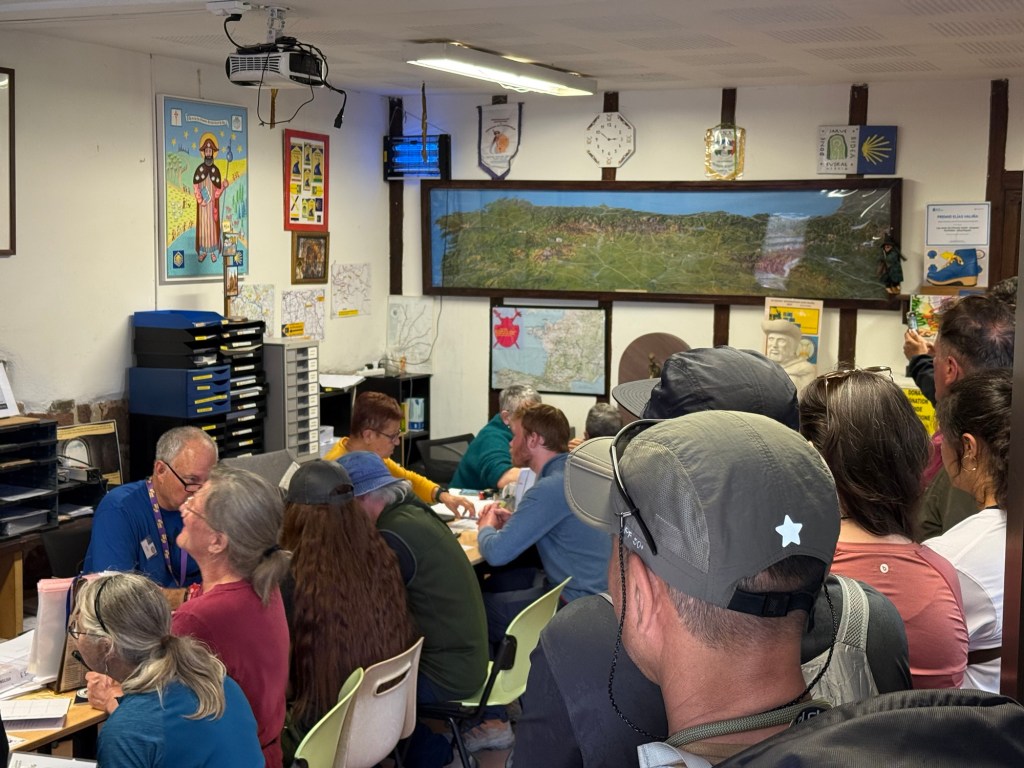
    By 2 p.m., we returned to the pilgrims’ office, where a line of about 20 waited. The five or so volunteers inside were thorough, giving each pilgrim ample time and attention, so it took nearly an hour to get our credentials and first stamp. A Canadian volunteer spent an inordinate amount of time with Graham, Vince, and fellow Australian, Lara. When Lara mentioned to the volunteer she’d hired a tourism company to handle her lodging and transport, the man—apparently joking—said she was avoiding the Camino’s suffering and taking a “posh” route. Lara, already upset after being ripped off by a Bayonne taxi driver, was brought to tears.

    The pilgrim’s office where pilgrims obtain their credential and first stamp

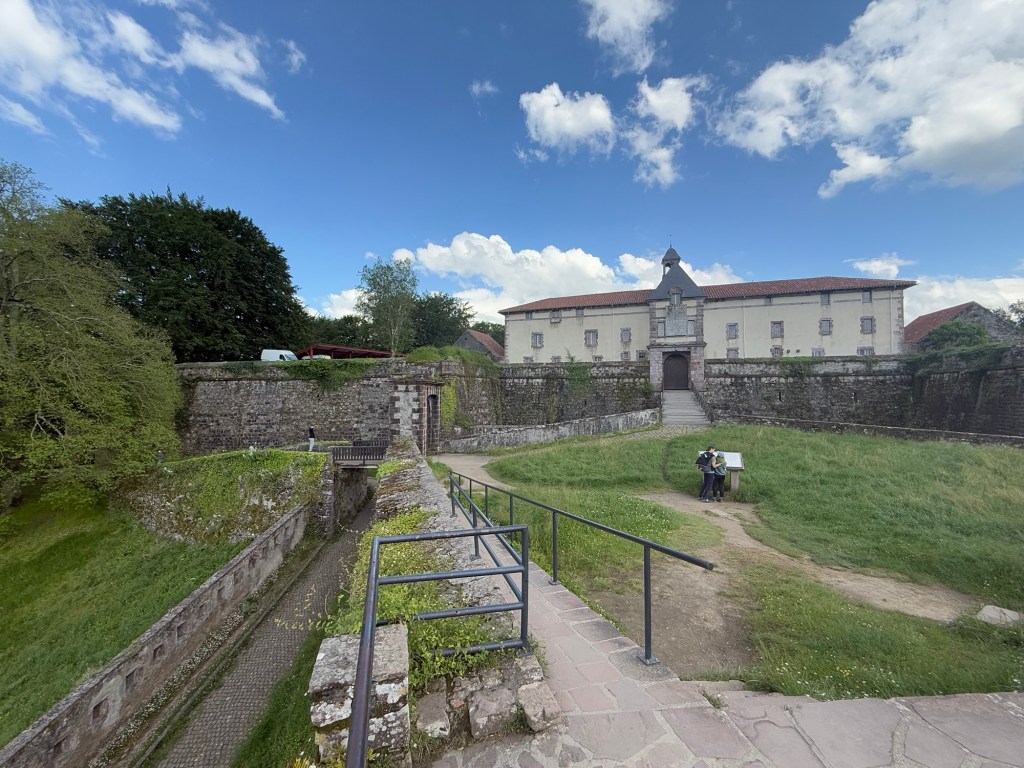
    Once we had our credentials—and after lifting Lara’s spirits by calling her tormentor a douchebag—Alex and I hiked uphill to the Citadel of Mendiguren—a 17th-century fortress.

    Citadel of Mendiguren

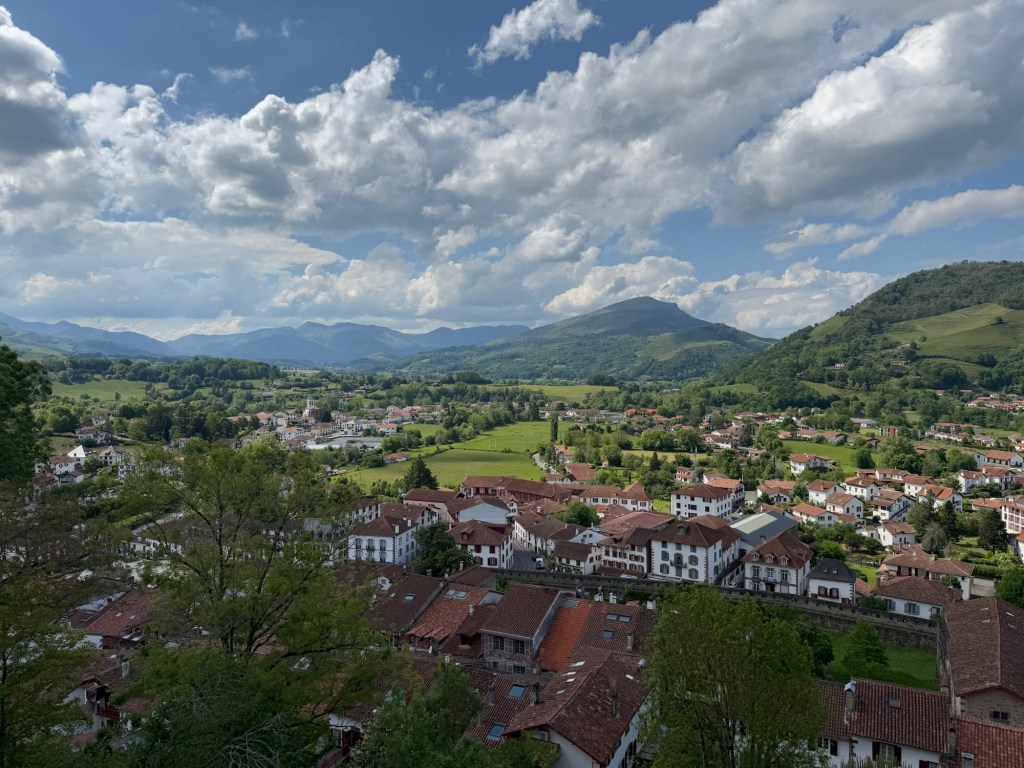
    The grounds were in surprisingly good shape for its age, offering sweeping views of the valley below. It seemed to have served as a school recently but now appeared abandoned. We walked the grounds for about thirty minutes.

    A view of Saint-Jean-Pied-de-Port from the fort.

    At 4 p.m., Alex and I walked back through town’s main corridor to our hostel across the river and checked in. After making our beds, we met Graham, Vince, and Tony for dinner at Café de la Paix. They each ordered different pizzas to share; I opted for a double cheeseburger and fries. With beers, the bill for five came to €100—surprisingly reasonable.

    Alex, Tony and I returned to our eight-person hostel room. I showered and climbed into my top bunk, ready for some much-needed sleep.

    Tomorrow, I’ll take a short five-mile day to Orisson via the Napoleon Route, while the others plan to push on 10-miles further to Roncesvalles.