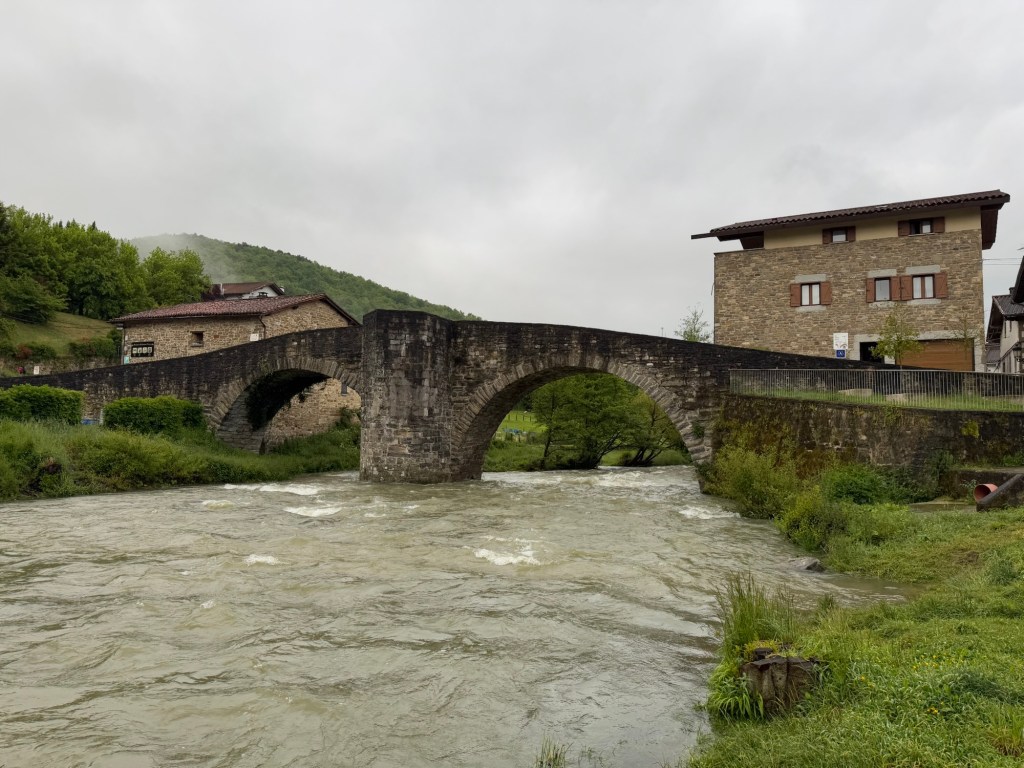
I woke at 7:15 a.m. to the sound of birds chirping and a swollen Arga river rushing from yesterday’s heavy rains. My calves and thighs were sore from the prior days’ hikes, so I popped a couple Advil.
In the kitchen, I perused a Basque guidebook while two pilgrims, Martha from the Netherlands and Mary from Ireland, chatted nearby. Upon learning I was American, they immediately dove into two of the three forbidden topics. Mary asked my opinion on Donald Trump, and Martha wanted to discuss American Evangelism. I sidestepped Mary’s question with Marcus Aurelius’ line, “You always own the option of having no opinion.”
But Evangelism? I grew up in Lynchburg, Virginia. I explained the core mission of evangelists: to save souls from eternal damnation. Some do this loudly with megaphones and signs at public events, like Westboro Baptist Church, while others take a quieter approach, coaxing neighbors to church functions.
Martha cut in. “I understand all that. I want to hear about tongues and snakes.”
Alright, I thought, straight to the good stuff. “Are you familiar with Pentecostalism?” I didn’t bother explaining. I pulled out my laptop, opened YouTube, and played a scene from Sacha Baron Cohen’s Borat—the one where Cohen’s character goes to church to get saved. They weren’t ready. Both women erupted in uncontrollable laughter. Halfway through, when Borat asks if Jesus loves his neighbor, Mary, crying from laughing so hard, begged me to stop.
I let it run a little bit longer, closed my laptop, and put my pack on.
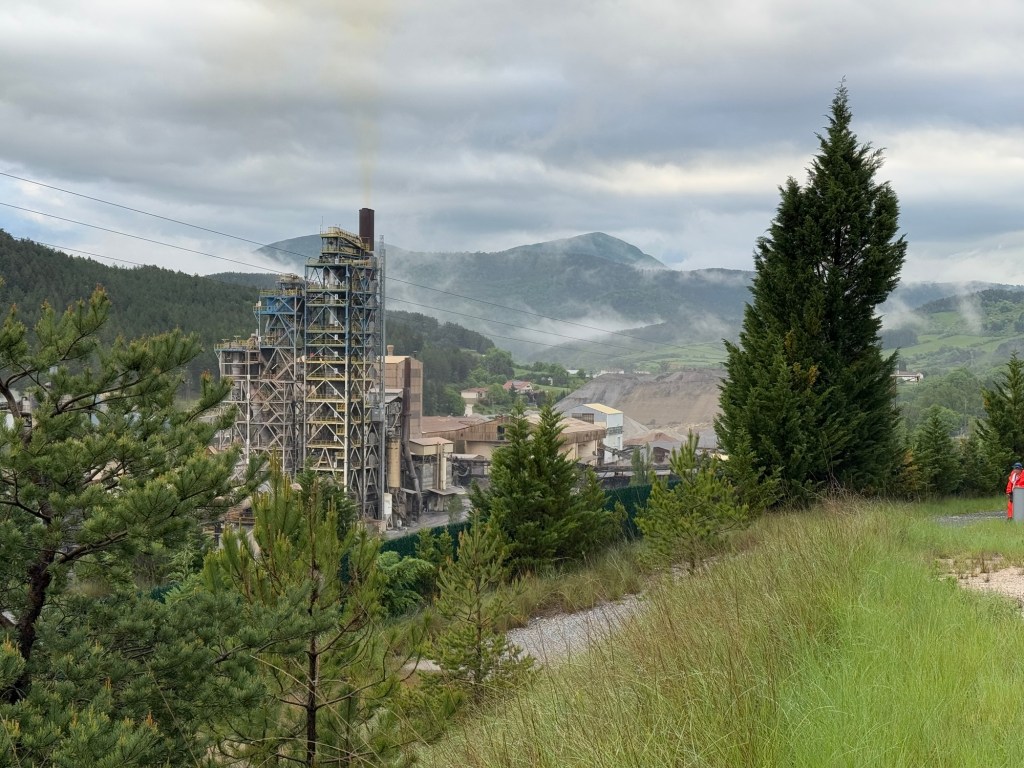
I set out from Zubiri, passing a magnesium smelting facility a quarter-mile outside town. Cresting a hill, the valley to Pamplona opened before me. The sky was gray, with clouds hanging low over the landscape. The cool air after the rain felt like natural air conditioning.
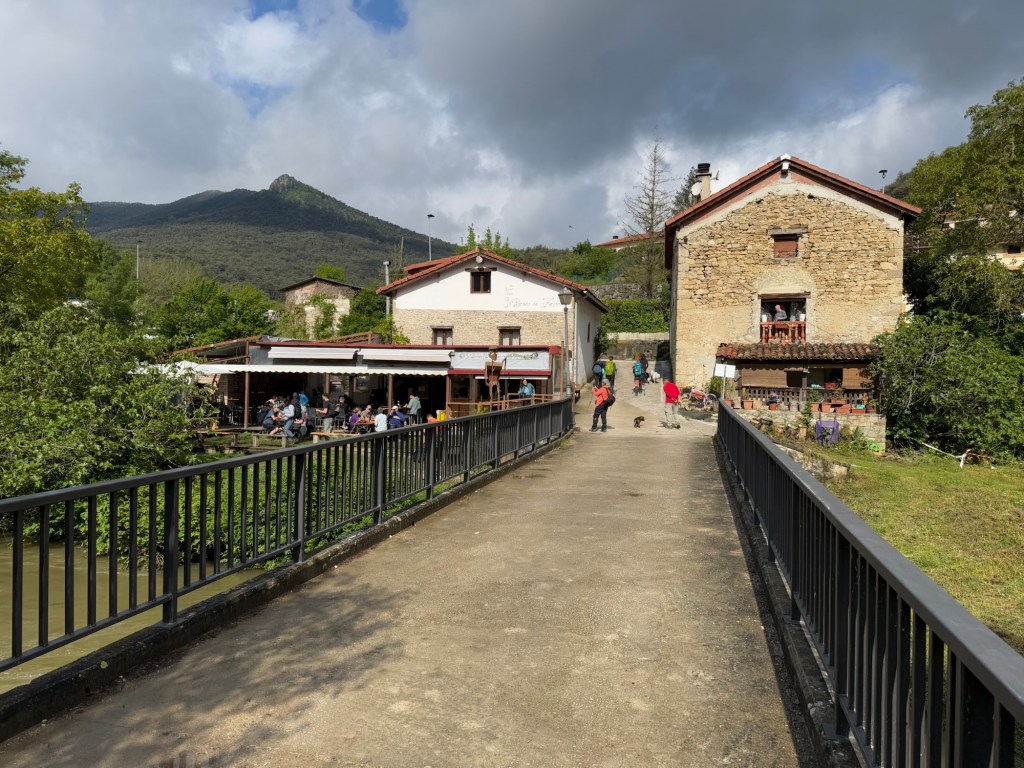
After five miles, the Camino rejoined the Rio Arga. At 10:30 a.m., I crossed the river at Zuriain and stopped at La Parada, a trailside café, for a roast ham bocadillo. A pair of flamenco guitarists, who appeared to be father and son, strummed away in a corner, their music filling the air.
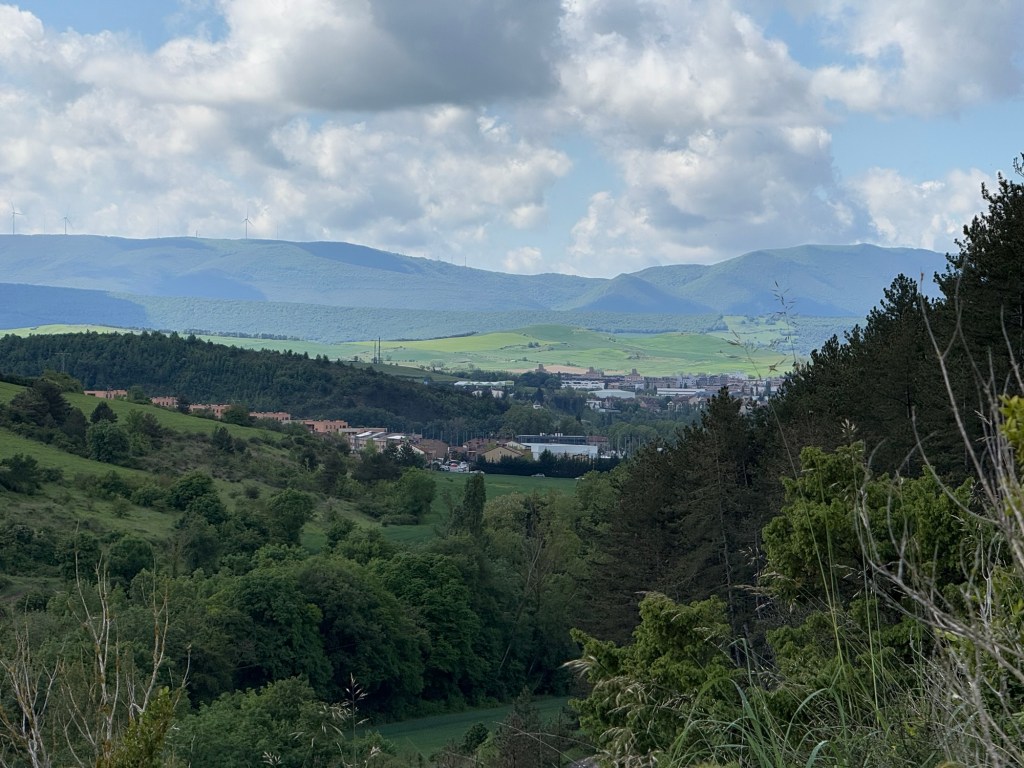
As I approached Pamplona, the trail climbed up the side of a ridge above the Arga and passed through a gorge. The path rounded the mountain to the west, revealing the first glimpse of Pamplona—a small cluster of white stucco-on-stone buildings with red tile roofs at the base of a lush green hill. Another turn to the southwest brought the city proper into view.
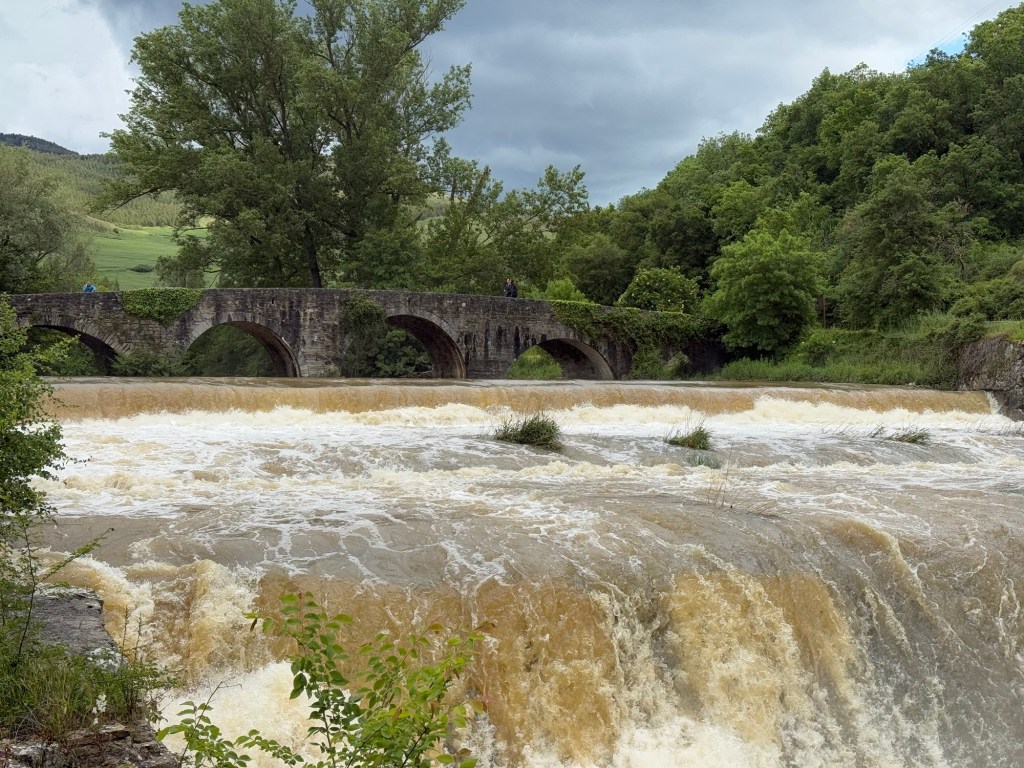
I crossed the medieval Trinity Bridge over a swollen Ulzama River into Villava. During the short distance from the river to Pamplona, I walked into a gigantes y cabezudos performance. Literally, giants and big heads. It’s a tradition which apparently goes back centuries.
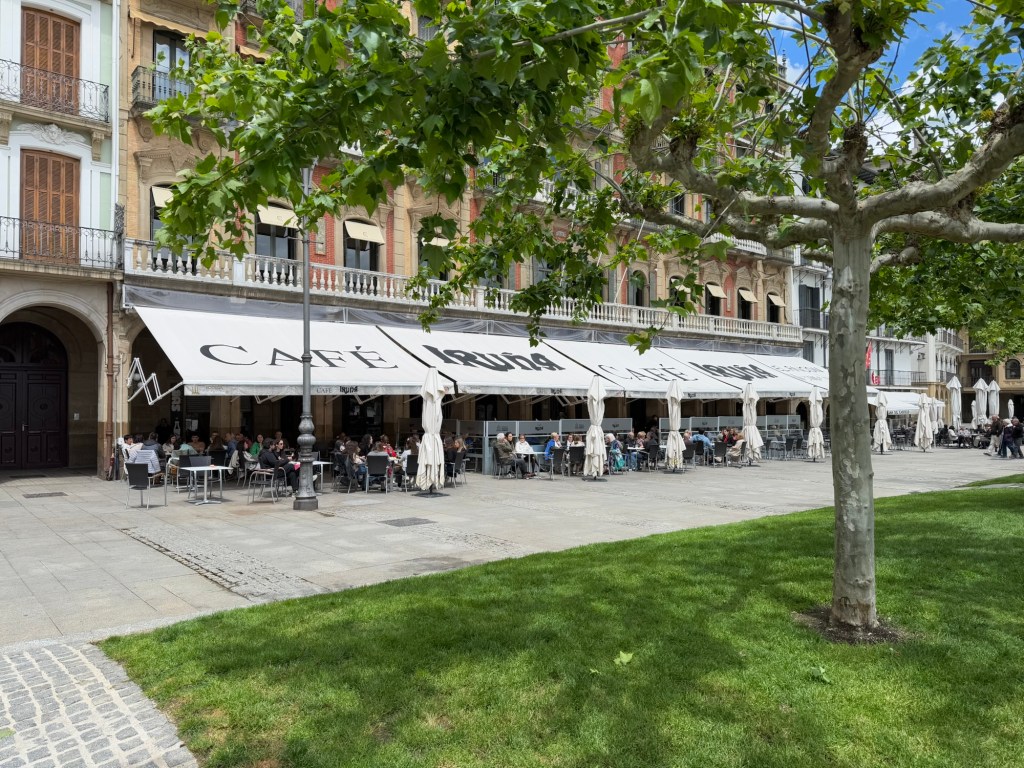
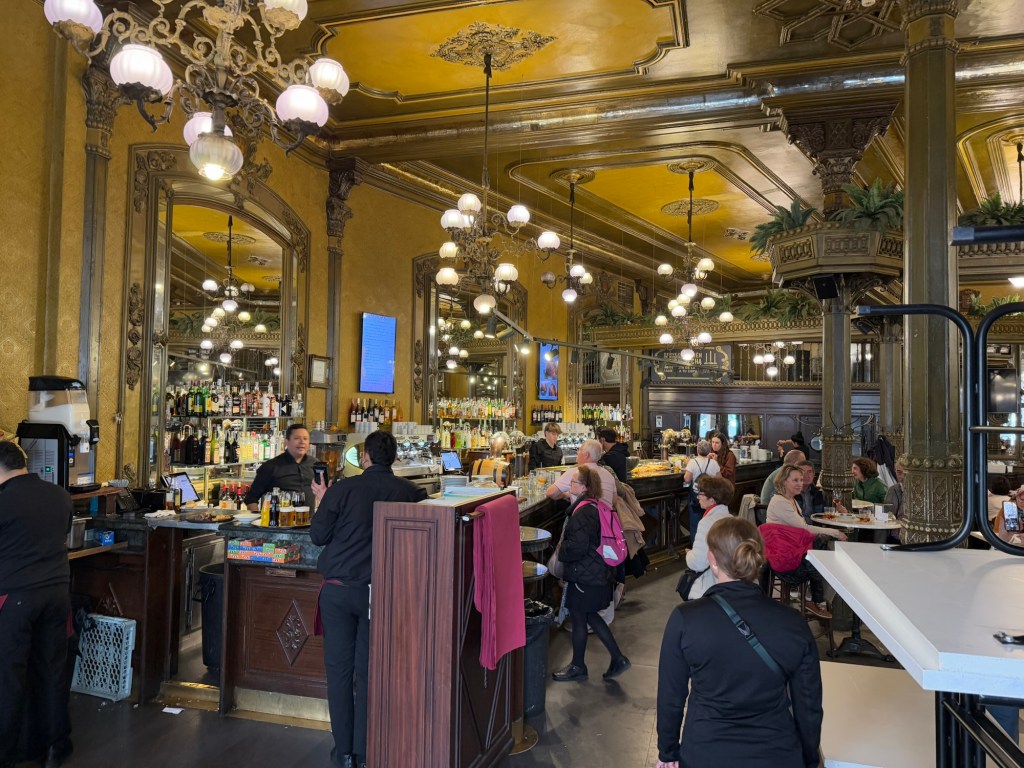
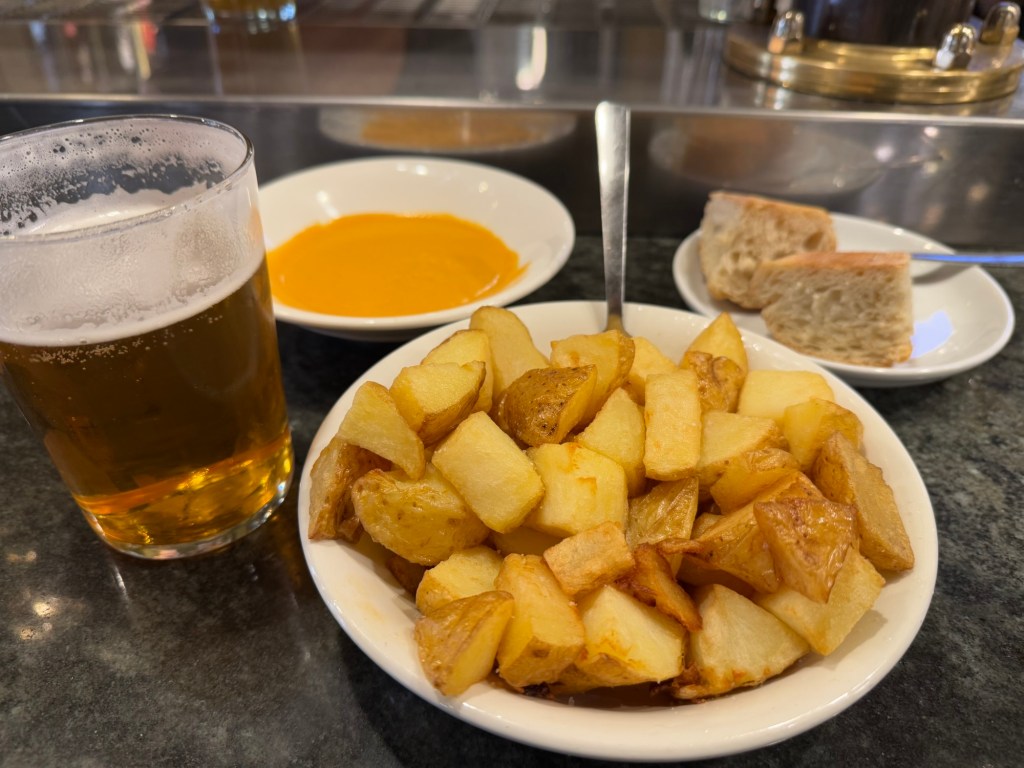
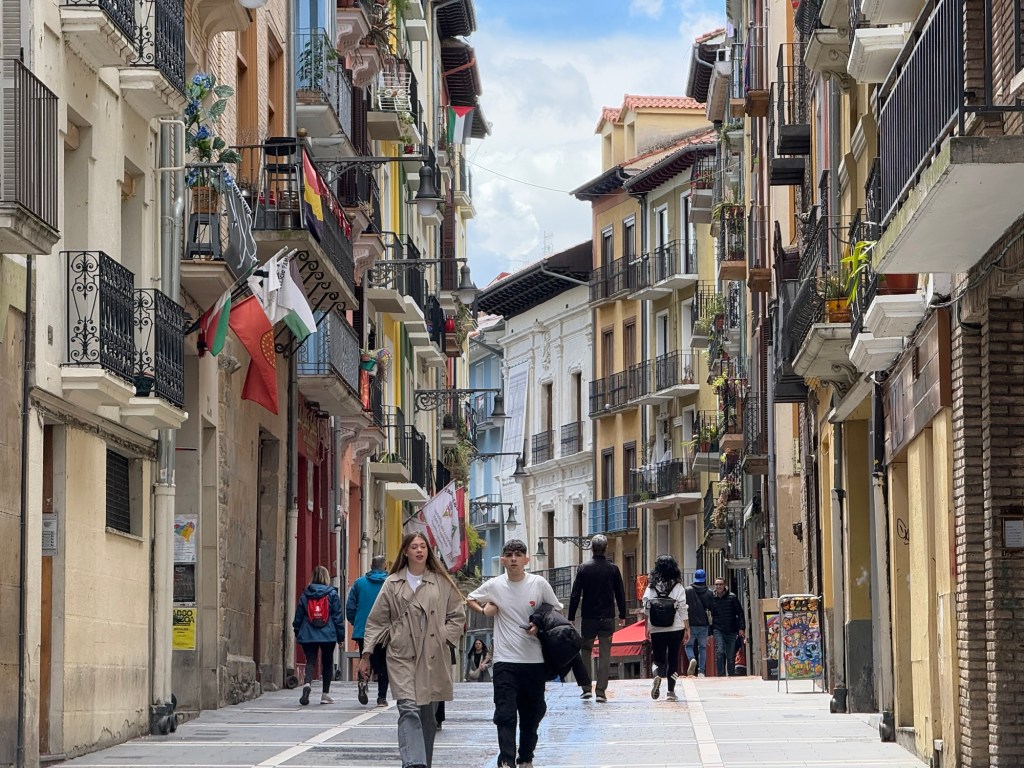
After that bit of distraction, it took me about an hour to reach the city center. I walked into Café Iruña, saddled up to the bar, and ordered a cerveza, patatas bravas, and tarta de manzana—all recommended by fellow pilgrims. One step inside, and it’s clear why Hemingway spent so much time here. Places like this, with their timeless charm, just aren’t common anymore.
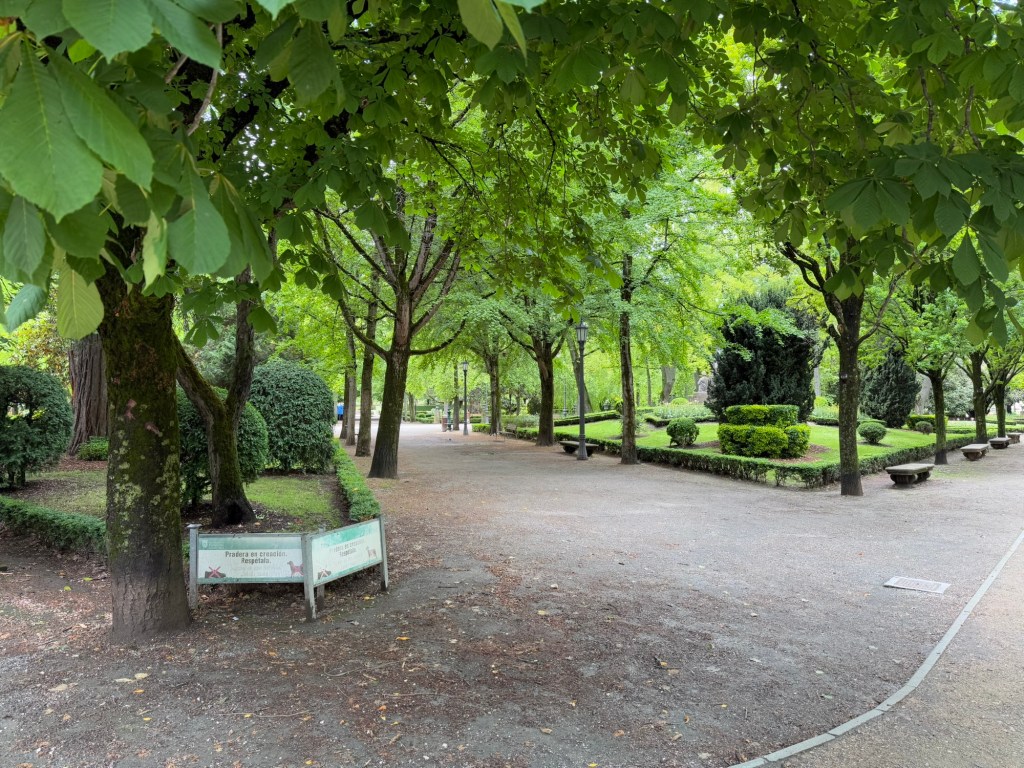
After a quick meal, I stuck to my original plan and hiked another two miles to Albergue Sanjuanista de la Orden de Malta in Cizur Menor. Along the way, the trail passed through the University of Navarre. It may just be one of the most beautiful campuses on earth.
At 3:45 p.m. I arrived at the hostel, took a shower, and did a bit of laundry in an outdoor sink. I’ve stayed here before—it’s spartan, but adding these extra miles today sets me up for an easier walk to Puente la Reina tomorrow.
 Brandon Hikes